Author Archives: katherineapreston

Unknown's avatar

About katherineapreston

I never get tired of looking at plants. My scientific research is in the area of plant physiological ecology, specifically the way plant form constrains or influences plant function. Throughout my career, I have had the pleasure of teaching introductory botany many times, and I love to see what happens when people start to look at plants closely, with patience, attention, and curiosity.

Figs and Mulberries, inside and out

A shorter version of this essay appears in the Autumn 2013 issue of the beautiful, creative online magazine Soiled and Seeded.  Here Katherine and Jeanne explain the topological relationship between figs and mulberries and do a little investigative journalism.

Mulberries

Mulberries

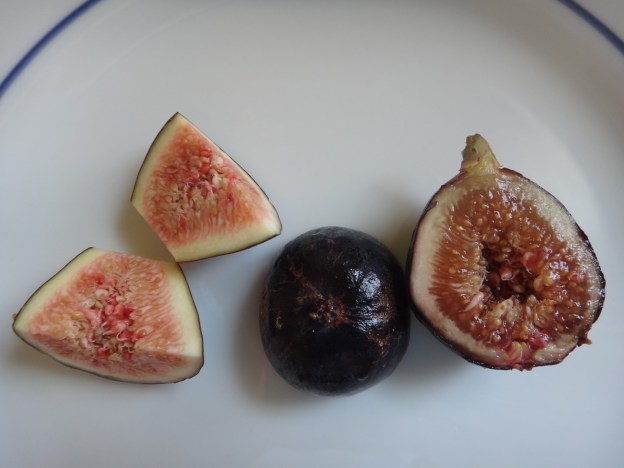
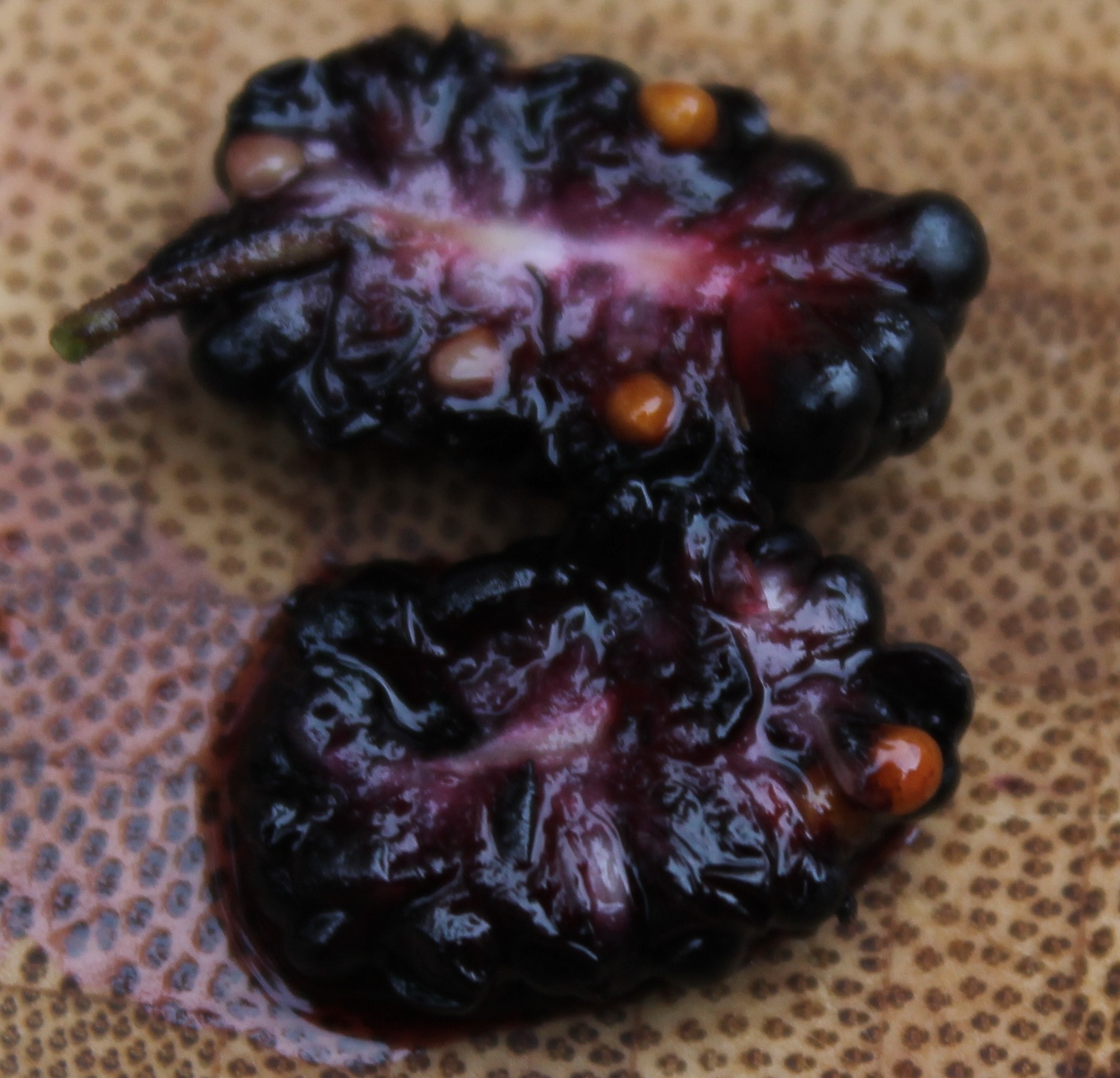
Figs and mulberries are both gorgeous, sexy fruits, but in very different ways. At first blush a mulberry could be the fragile hot-mess cousin of a blackberry, while figs are classically sensual fruits, like marble nudes teetering on the edge of vulgar. For all their fleshy assertiveness, both fruits keep their secrets; and it takes more than a long, intense gaze to uncover their close relationship and know what makes them sweet.  Mulberries may look like blackberries (and share a taxonomic order), but they are built from different plant components. The true siblings are mulberries and figs (both in family Moraceae), and at heart they are very much alike, although figs are clearly the more introverted of the two. Continue reading

Making ratatouille like a botanist

The story of the nightshades is usually told as a tale of European explorers, New World agriculturalists, and a wary bunch of Old World eaters.  But what about the birds?  And the goji berries?  Jeanne and Katherine introduce you to the Solanaceae family and walk you through the botany to be observed while making ratatouille, the classic French collision of Eastern and Western nightshades.

Can you imagine Italian cuisine without tomatoes? The Irish without potatoes? Chinese cuisine without spicy, fruity chiles?  Such was the case prior to the discovery of the New World nightshades (family Solanaceae) by sixteenth-century Spanish explorers.  And they couldn’t help but run into them.  Solanaceae is a huge family, with over 100 genera and nearly 2500 species, most of which are in Central and South America. Continue reading

Pear grit and the art of aging

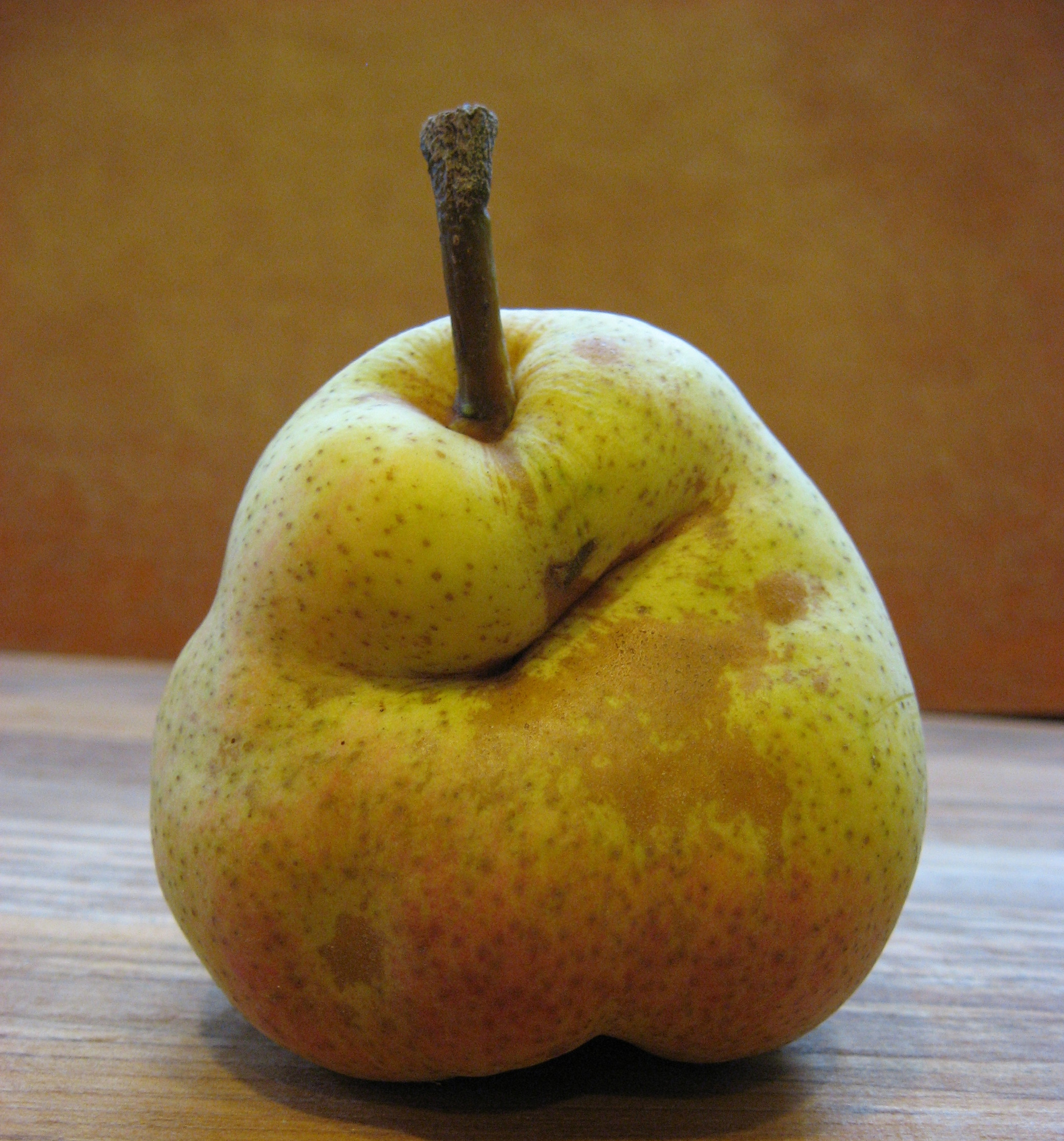
Nostalgia emanates from a basket of pears, inspiring Katherine to explain what makes up these glorious, gritty, and gorgeous late-summer fruits.

Last week a dear friend conjured an entire autumn for me when she handed me one of her pears.  She had picked it a few days prior from one of the small espaliered trees that guard the outside of her bedroom wall and overlook her garden.  It was pale buttery gold with a pink blush, soft and honey-flavored.  A month past the solstice, we were still able to enjoy the low sun well into early evening as we sat on her deck and gazed over the garden, savoring the fruit.Rosaceae talking pear
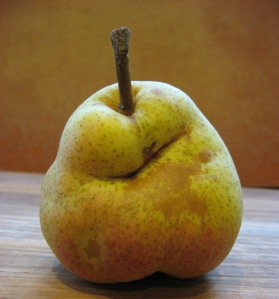
Bartlett pears, like my friend’s, ripen in the summer and yet they herald the fall.  They appear, and we start the inevitable tumble towards apples, wool socks, and the bittersweet baseball postseason.  Other popular varieties, such as Bosc and d’Anjou, tend to arrive later, when we have already come to terms with shorter cooler days.

I love apples, but they are not as emotion-laden for me.  Whereas apples seem timeless, even summer pears carry an old fashioned patina.  They evoke a time when canning was a skill necessitated by the Depression, but which still made a lot of good sense.  My grandmother must have spent a thousand hours canning the soft sweet pears from her trees.

Pears also know how to age right.  Apples are harvested ripe from the tree, but pears should be taken when they have reached their full size and before they are ripe.  My friend always picks her pears before the squirrels can mark them with bite-sized divots, a practice that also happens to keep them from becoming mealy on the tree.  She sent me home that day with a bag of firm green Bartletts and instructions to hold them in a bag in my kitchen for a couple of days.  Summer varieties don’t require chilling, but d’Anjou and Comice pears benefit from a month of nearly freezing temperatures, followed by ripening at room temperature (Stebbins et al).  The proper aging of pears is all about managing the activity of enzymes that alter various compounds and break down cell walls.  Such treatment would ruin high-maintenance peaches, which are horrified by the thought of getting old and don’t take well to chilling. Continue reading

Aching for strawberries

If you have ever doubted the practical side of  plant anatomy, keep reading, as Katherine explains what you can learn about flowers by cutting up a strawberry.  As it turns out, this enigmatic little gem is packed with coincidences and apocrypha along with its citric acid and anthocyanins.  Could it turn out to be true that a strawberry is a berry after all?

Welcome to early June, when strawberry season is finally well underway across the US, as far north as the upper Midwest and New England.  Here in the promised land where little green plastic baskets are never empty (coastal northern California), there is still a peak season for strawberries, since the popular varieties don’t reach their full potential until mid-May.

With so many strawberries in so many kitchens this month, now is the perfect time to merge botany lab and breakfast preparation by working through the many parts of a strawberry.  Once you have mastered berry dissection, I promise you will find it a surprisingly versatile skill.  Having the confidence to steer a conversation towards strawberry anatomy can help you recover from one of the more awkward inevitabilities of summer – biting gracelessly through an enormous chocolate-covered strawberry just as you are introduced to the mother of the bride.  After you have pointed out the veins and ovaries and have explained the developmental origin of the epicalyx, she won’t remember the red juice and bits of chocolate shell you have just dribbled down your frontside.  Or so has been my experience. Continue reading

Preparing asparagus: the facts about bracts, part 2

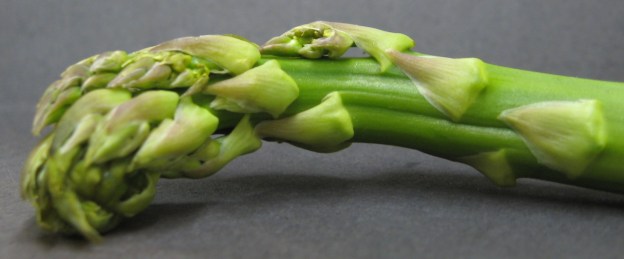
If artichokes are big balls of spiny bracts, then asparagus spears are telescoped rods with membranous scales.  In this follow up post, Katherine takes on asparagus, both the tender and the tough, and explains why peeling can’t rescue a woody spear.

Asparagus is a hopeful spring vegetable.  Asparagus aspires, breathes in the warming spring air, and optimistically pokes its nose up from the ground.  Its tips are clusters of tiny developing branches, still packed tightly like an unexpanded telescope, containing all the potential of a season’s worth of growth.  Except that we whack them and eat them  before they can realize their audacious plant dreams.  There’s no need to feel entirely bad about this, though.  The spears stay alive for a while, stubbornly growing tougher until they are cooked or digested. Continue reading

How to make an artichoke: the facts about bracts, part 1

Inspired by spring and the appearance of both artichokes and asparagus, Katherine explains artichoke morphology in the first of two posts about bracts and scales.

Artichokes don’t exactly look like food, and their name in English is homely and offputting.  The scientific name is no better.  Cynara cardunculus variety scolymus rolls off the tongue like a giant ball of tough spiny bracts.  I’m not ready to call it an onomatopoeia, even though artichokes are giant balls of tough spiny bracts.  And the word “bract,” on its own, is just flat-out ugly.  But artichoke bracts have delicious meaty bases, and they protect the tender inner part of the bud which we call the heart, so I am a C. cardunculus var. scolymus bract fan. Continue reading

A very close look at potato leek soup

To understand how potatoes behave in the stock pot, Katherine puts a favorite soup under the microscope – literally.

Potato leek soup is the perfect soup. It is heaven pulled from the ground in all its humble grassy beauty. Potato leek soup is good-looking, simple, and flexible. It can be made vegan and provides nutrients and fiber with few calories. It is cheap, scales up for a crowd, and freezes well. Plus you have to love a soup with more names than ingredients. As a comforting wintertime staple, we call it what it is – potato leek soup. In tiny cups, sprinkled with chopped parsley and freshly ground black pepper, it becomes potage Parmentier, a rich tasting but delicate entrée to an elegant dinner party * . Chilled, with fresh cream, it is Vichyssoise, the cool, light partner of a good baguette and a glass of Pouilly-Fumé on the patio in summer. And my mother-in-law has demonstrated many times that when the holidays overwhelm your fridge, you can store a huge pot of potato leek soup on the porch overnight – as long as you put a brick on the lid to keep the raccoons out.

This amazing soup is the just about easiest thing in the world to make. Julia Child’s version is probably the most widely used, and the one I like: simmer equal parts cubed potato and sliced leek in water until they are tender. Add salt to taste and puree. A bit of cream is optional. A dusting of chopped parsley and freshly ground black pepper is divine. I like to err on the side of more potatoes than leeks, but the soup is robust to variations in proportion.

But is it really so easy? If you trust the internet more than you trust your favorite dog-eared chocolate-spattered cookbook with the broken spine and decades of marginalia (silly you), you may worry that without the right kind of potato and extremely careful handling, your soup will end up gluey. Is any wallpaper not pre-pasted these days? Doubtful, but everyone seems to describe gluey potato soup or mashed potatoes as “wallpaper paste.” I will say right up front that gluey soup has never happened to me, but given all the stress over this utterly simple soup, it seemed worth investigating. Continue reading

A look at leeks

FLUELLEN …and I do believe your majesty takes no scorn to wear the leek upon Saint Tavy’s day.
KING HENRY V I wear it for a memorable honour; For I am Welsh, you know, good countryman.
Shakespeare, Henry V, act 4, scene 7

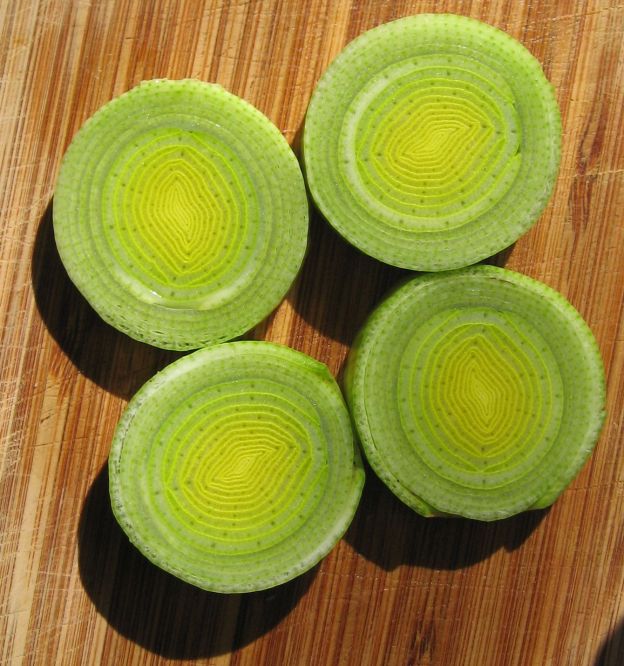
Break out the daffodils and leeks!  This past Friday, March 1, was St. David’s Day, the feast day of the patron saint of Wales and a national holiday in that country.  As long as you are cleaning and slicing leeks, let’s take a quick close look at the vegetable, one of the national symbols of Wales. Continue reading

Welcome to 2013, the International Year of Quinoa

Can we call quinoa a grain? Why do people care?  Where did all these geese feet come from, and what does Ban Ki-moon have to do with it?  On long winter runs, Katherine’s mind wanders over such questions.

Quinoa seeds (Chenopodium quinoa)

Quinoa seeds (Chenopodium quinoa)

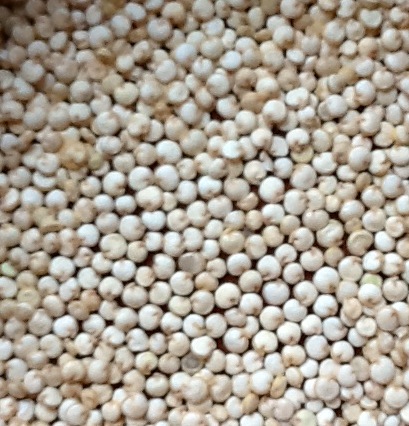
In the final two months of 2012, questions about quinoa and its status as a “grain” came up three separate times within my earshot.  This was odd in itself, but it launched a cascade of coincidences.  On a run near the baylands, my mind was idling back over those conversations, when I noticed for the first time a little weed along the trail, looking much like one of quinoa’s relatives, a saltbush.  (The crushed specimen I carried home in my shoe laces keyed out as Atriplex semibaccata, Australian saltbush.)  There is also a gorgeous and much larger saltbush species along the trail, and yet another relative, an edible Salicornia species (“sea beans”) that fills the marshy areas next to the bay.  Along with quinoa, spinach, beets, and chard, all of these species belong to the (former) goosefoot family – the Chenopodiaceae – which is now considered a branch nested within the Amaranth family.  Quinoa is a central member of this old family, belonging in the namesake genus Chenopodium. Continue reading

The most interesting layer of wax in the world

It’s high season for kale and apples, and Katherine just can’t stop talking about epicuticular wax

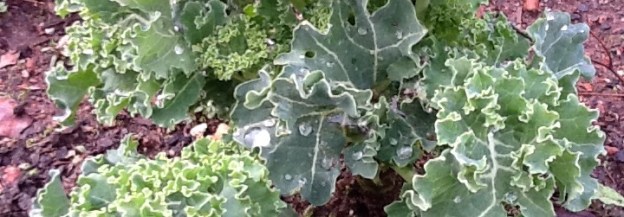
There is something nostalgic about kale and its softly glowing dusky cast that suits late autumn and early winter. It looks rustic and thick-skinned, steeled against falling temperatures and short days. It even shrugs off winter rains. Water beads up and rolls right off its leaves. Kale’s ageless still-life look is due to its extraordinary epicuticular wax, a legacy of the first plants to survive on dry land. Continue reading