Tag Archives: Jeanne L. D. Osnas

Making ratatouille like a botanist

The story of the nightshades is usually told as a tale of European explorers, New World agriculturalists, and a wary bunch of Old World eaters.  But what about the birds?  And the goji berries?  Jeanne and Katherine introduce you to the Solanaceae family and walk you through the botany to be observed while making ratatouille, the classic French collision of Eastern and Western nightshades.

Can you imagine Italian cuisine without tomatoes? The Irish without potatoes? Chinese cuisine without spicy, fruity chiles?  Such was the case prior to the discovery of the New World nightshades (family Solanaceae) by sixteenth-century Spanish explorers.  And they couldn’t help but run into them.  Solanaceae is a huge family, with over 100 genera and nearly 2500 species, most of which are in Central and South America. Continue reading

Super styled

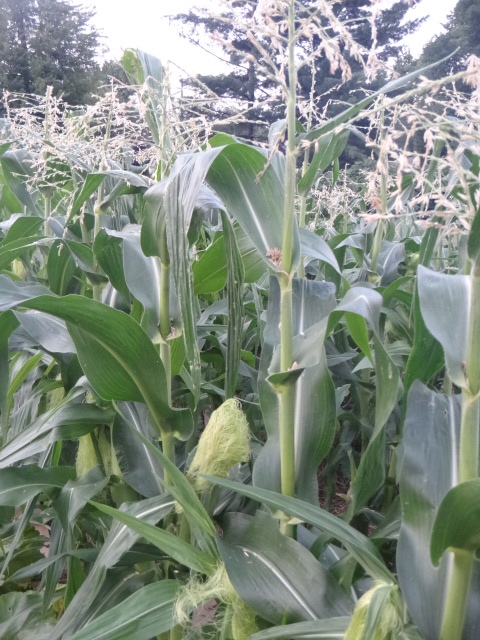
Corn silks are annoying, but they’re also amazing. The longest styles on the planet don’t make it easy for corn pollen to do its job.  Gain new respect for your corn on the cob. 

Corn plant. Tassels with male flowers on top, ears with exposed silks in the middle

Corn plant. Tassels with male flowers on top, ears with exposed silks in the middle

Fresh corn (Zea mays, Poeaceae) is a summertime treat. Shucking corn silks, though, can be a pain.  Corn silks, however, are amazing, and maybe knowing why will ameliorate their annoyingness.  Formally corn silks are the style, the part of the female flower that intercepts pollen.  Female flowers of many species have a stigma, a sticky pad, atop their styles to intercept pollen, but corn silks are lined with sticky trichomes (like hairs) that essentially do the same thing.  Corn silks are incredibly long styles.  Can you think of another plant with a flower appendage that could rival it?  I can’t.  Continue reading

Tarragon’s family tree

Tarragon is one of many Artemisia species with a storied past.  Jeanne introduces you to her favorite genus. 

If you love eating French food, and especially if you love cooking it, when you see a tarragon bush, inevitably you think of the French quartet fines herbes:  fresh parsley, chives, tarragon and chervil.  You may reminisce about a perfect (or broken) Béarnaise sauce.  These days when I pass my tarragon plant I vow to actually use it, as we’ve neglected it this year.  I also think of sagebrush.  And absinthe, martinis, and Shakespeare. And weeds, malaria, and hippies.  I attribute this motley mental association to tarragon’s membership in my favorite genus, Artemisia, a large group in the composite (sunflower) family, Asteraceae, with a rich history. Continue reading

Caterpillars on my crucifers: friends or foes?

A high glucosinolate (putatively anti-cancer) broccoli variety is now on the market.  Jeanne wonders if caterpillar herbivory-induced increases in glucosinolates can match it.  The answer is unsatisfyingly complicated. 

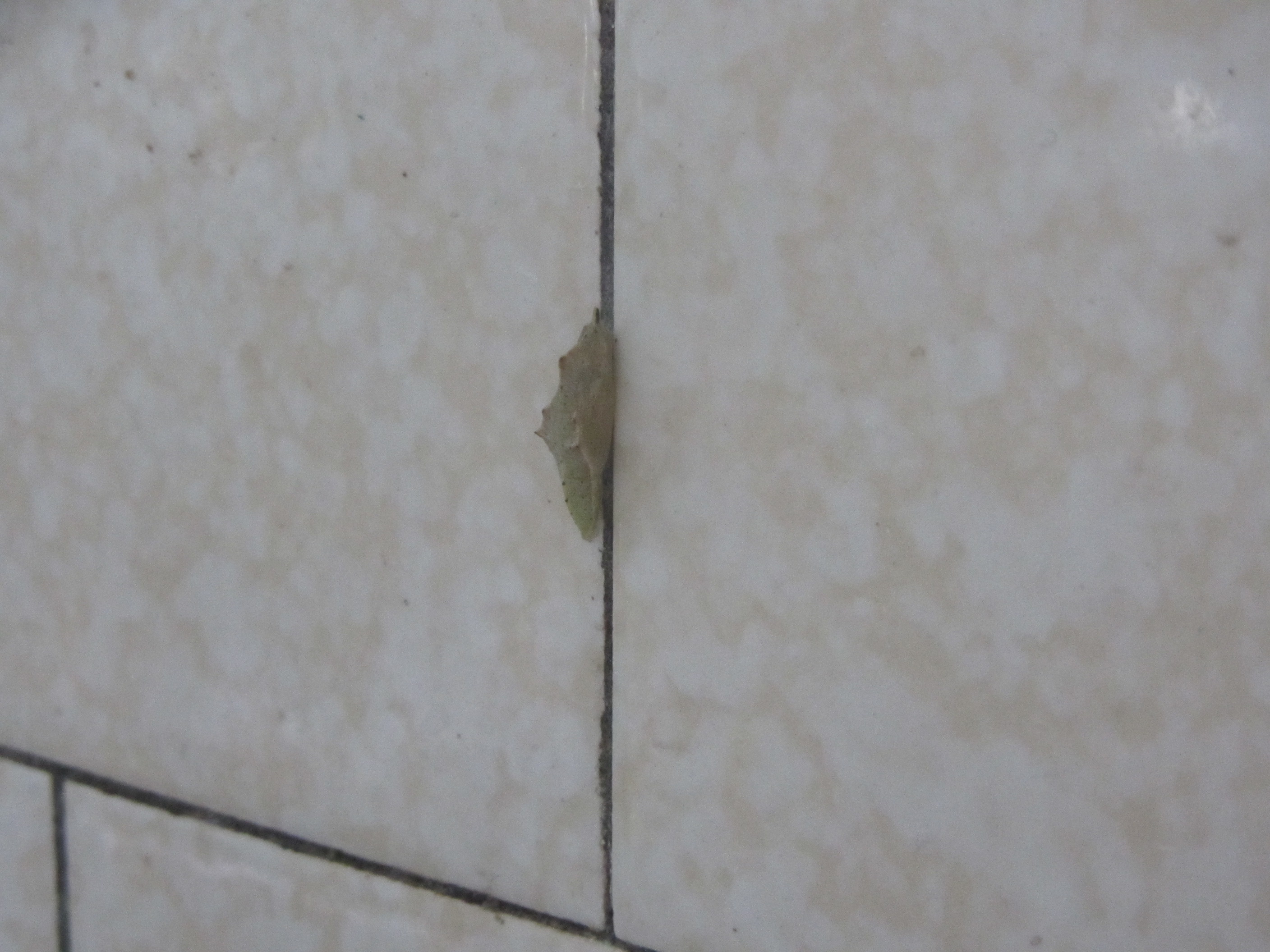
Cabbage butterfly pupa on the tile above my sink. A survivor from washing crucifers from the garden.

Cabbage butterfly pupa on the tile above my sink. A survivor from washing crucifers from the garden.

There are three primary reasons why I haven’t launched aggressive war on the cabbage butterfly (Pieris rapae) caterpillars munching on the cruciferous veggies in my garden, even though I don’t like them:  (1) garden neglect; (2) hostility towards most pesticides; and (3) bonhomie toward caterpillars by my toddler.  There is also a fourth reason.  I know that in general most plants increase production of chemical defense compounds when they detect that they’re being attacked by pathogens or herbivores (Textor and Gershenzon 2009).  Some of these defense compounds have been shown to be beneficial for human health, including those in crucifers.  I’ve been wondering for a while if those caterpillars were actually enhancing the value of the tissue they didn’t consume.  A recent report about a high-defense-compound laden variety of broccoli prompted me to do some research into the issue.  I’m left with more questions than answers. Continue reading

Bamboo shoots: the facts about bracts, part 3

Bamboo shoots invade the lawn.  The biggest two are ready for harvest (photo by David Inouye)

Bamboo shoots invade the lawn. The biggest two are ready for harvest (photo by David Inouye)

Jeanne continues Bract Month here at the Botanist in the Kitchen by describing the morphology of an interesting and delicious springtime specialty:  fresh bamboo shoots.

I had the distinct pleasure a few weeks ago of trying a temperate springtime speciality:  fresh bamboo shoots.  The friend who shared them with me has a backyard bamboo thicket and harvests the young shoots when they pop up as incursions into the lawn.  Globally, he is in good company, as the fresh shoots show up in springtime (or otherwise seasonally appropriate) markets in most of Asia, which is the native range of most of the 1400+ bamboo species.  Probably like many modern Americans, before steaming the fresh shoots and putting them in a lovely spring chopped salad last week (we used a lemon-garlic-dill vinaigrette), I had only eaten bamboo shoots as neat, thin, rectangular or julienne slices of canned bamboo shoots in various Thai curries at and Chinese soups in restaurants.

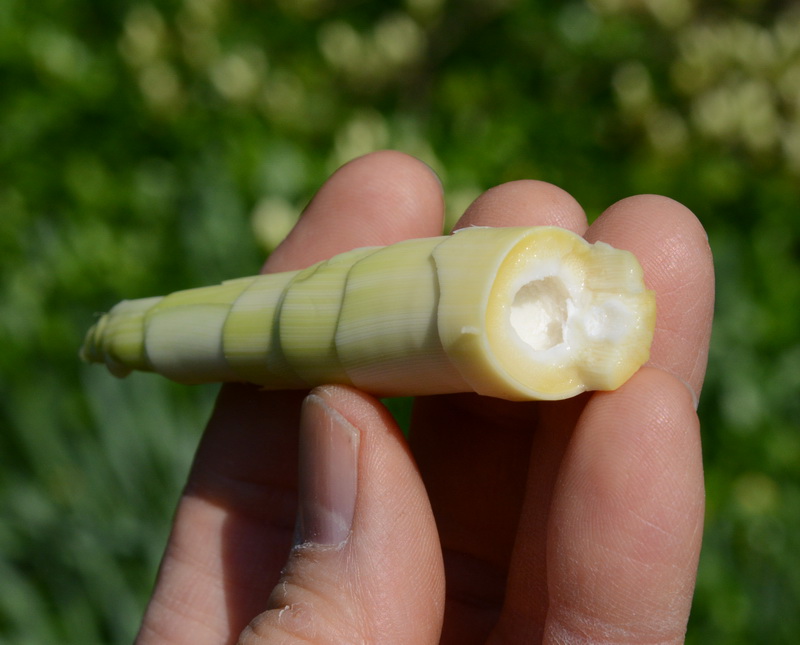
Peeled bamboo shoot, showing tender immature leaves and apical meristem tissue

Peeled bamboo shoot, showing tender immature leaves and apical meristem tissue (photo by David Inouye)

The fresh shoots are a big improvement over the canned and have the texture of asparagus and a flavor like a mild, tangy corn.  These similarities might arise from shared evolutionary history between bamboo and both vegetables.  Like corn, bamboo is a grass (family Poaceae; see our post on the evolution of gluten within the grasses for a phylogenetic context of bamboo within the grasses).  Like asparagus, bamboo is a perennial monocot (see our monocot diversity essay and our food plant tree of life for a refresher on monocots and their phylogenetic position within all plants), and its shoot is a new young stem developing from underground stems called rhizomes that spread out from a parent plant as a form of asexual reproduction. Continue reading

Greens: why we eat the leaves that we do

Jeanne reveals which branches of the evolutionary tree of plants bear edible leaves and speculates about why that is.

Giant coconut palm (Cocos nucifera) fronds dwarf me

Giant coconut palm (Cocos nucifera) fronds dwarf me

Most of the 300,000 + plant species have leaves, and the function of all of them is to perform photosynthesis.  They are the ultimate source for all of the oxygen and food for the rest of the food chain and help regulate the global carbon and water cycles.  They are also nutrition superstars.  To figure out why greens are good for you and whether all leaves are equal in this regard, we need to take quick look at global leaf structural variability and broad evolutionary patterns in the species that make their way onto our tables. Continue reading

Cucurbita squash diversity

Jeanne introduces the diversity of some American natives, the squashes in the genus Cucurbita.

Spring is officially here, and I have squash on my mind.  We’ve ordered zucchini seeds for the upcoming summer garden but still have acorn squash from the fall sitting in the pantry (both are varieties of Cucurbita pepo). Our winter vegetable CSA box recently bequeathed to us the tastiest winter squash I’ve ever eaten, a Seminole pumpkin, which is a different variety of the same species (Cucurbita moschata) as the butternut squash sitting on the counter, destined for dinner.  Now between last year’s hard winter squashes and the tender summer squashes to come seems a good time to remind ourselves of the origins and diversity of squashes in the genus Cucurbita. Continue reading

Maple syrup mechanics: xylem, sap flow, and sugar content

It’s maple syrup making time in the Northeast.  Jeanne explains the mechanics of sap flow, collecting sap for syrup making, and why maples are special in this regard.  

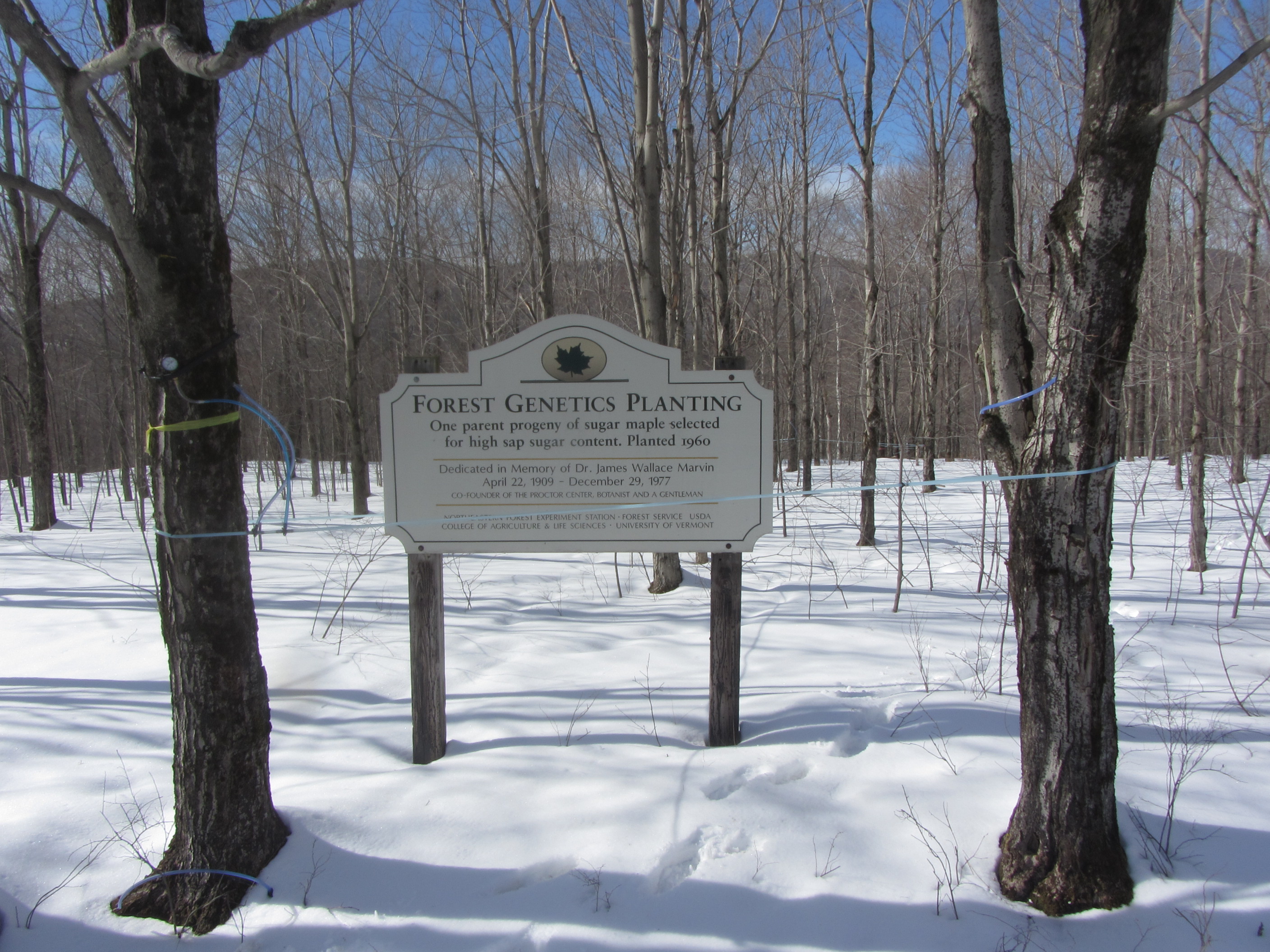
Proctor maple research field station, Underhill, VT

Proctor maple research field station, Underhill, VT

I had the great pleasure last weekend to visit the University of Vermont’s Proctor Maple Research Center in Underhill, VT, where the sugar maple (Acer saccharum, Sapindaceae) sap is flowing.  Sugar maple trees all around the northern hardwood forests in the Midwestern and Northeastern United States and southeastern Canada can now be “tapped,” fitted with a hollow tube in the sapwood, out of which sap flows and is collected and boiled down to maple syrup.

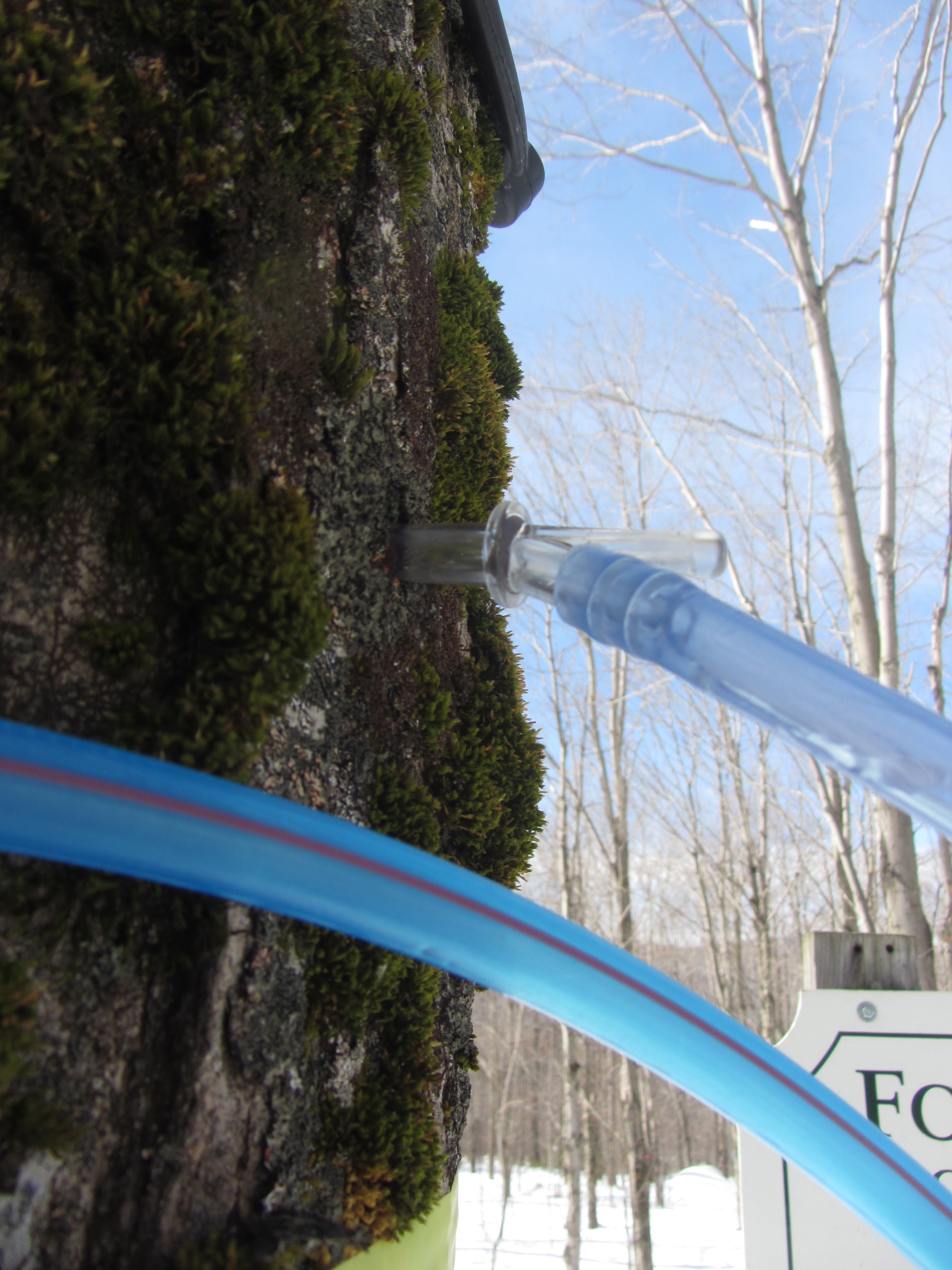
Tapping sugar maple to collect sap

Tapping sugar maple to collect sap, Proctor research station, Underhill, VT.

Maple syrup might be the oldest agricultural product in North America. Early 17th-century written records from Europeans exploring North America describe Native American use of sugar maple sap.  We of course can’t know how Native Americans discovered sugar maple sap, but it may have been by sampling a “sapsicle,” icicles made from frozen maple sap that forms at the end of a broken twig.  The evaporation of water during ice crystallization partially concentrates the sugar in the sap, making the sapsicle particularly sweet.  To understand how that sap got to the end of the twig in the dead of winter and why it’s so sweet, we need some basics about plant vasculature and carbohydrate storage and must figure out what makes maples so special. Continue reading

Pomegranates and the art of herbivore attraction

Jeanne walks you through the botany you need to know to understand pomegranate fruit structure.  Jeanne’s definition of “need to know” is arguably a bit broad and includes a brief tour of the many different structures plants modify in order to entice herbivores, and at least one goddess, to disperse seeds. 

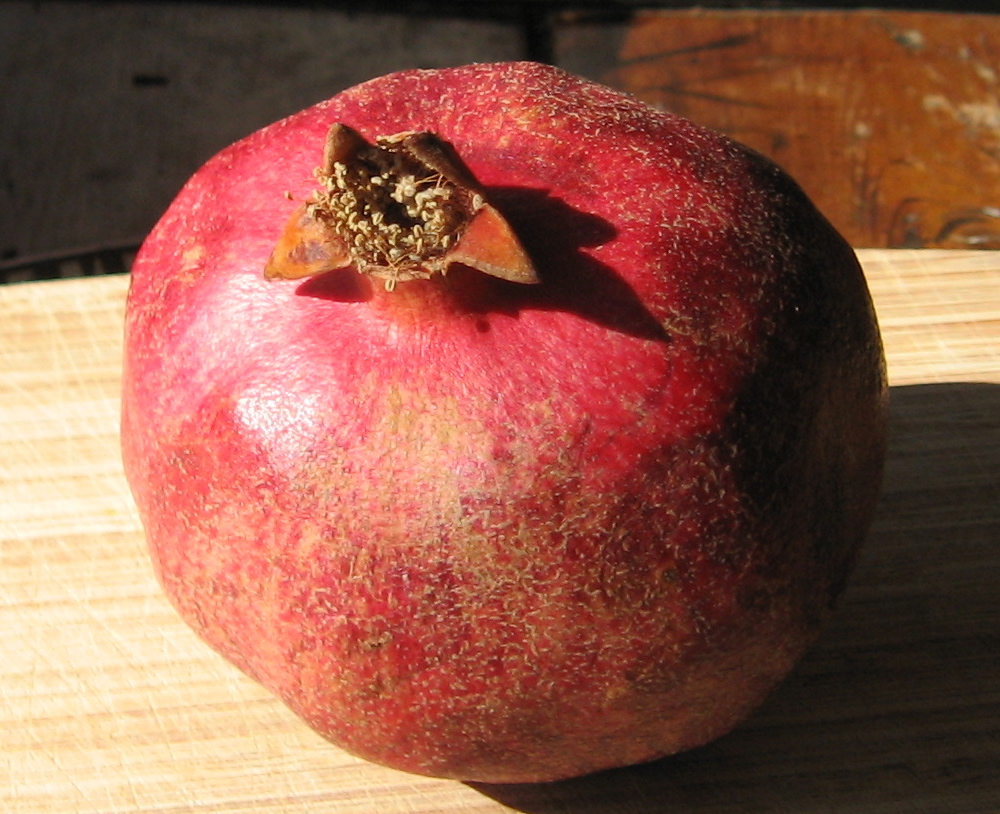
pomegranate fruit (persistent calyx and stamens visible)

pomegranate fruit (persistent calyx and stamens visible)

Pomegranates (Punica granatum, family Lythraceae, rosid order Myrtales) were one of the earliest domesticated plant species.  According to ancient Greek mythology, they even predate the seasons.  The story goes that Hades, god of the underworld, kidnapped his beloved Persephone, daughter of Demeter, goddess of the harvest.  Demeter’s grief over Persephone’s disappearance caused the crops to wither and wreaked havoc with humanity.  The plight of the starving masses coerced Zeus to convince Hades to return Persephone to her mother.  Before she left the underworld, however, Hades tricked her into eating a pomegranate seed, which bound her to evermore spend part of the year with her happy mother, during which time plants flourished, and part of the year in the underworld, during which time plants go fallow. Thus, seasons arose.

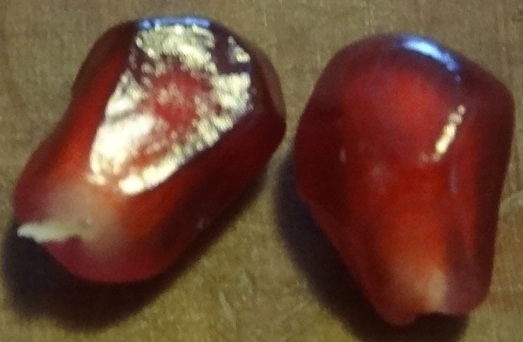
Pomegranate seeds

Pomegranate seeds

We can hardly blame poor Persephone for finding pomegranate seeds irresistible.  They look like faceted jewels and have a refreshing, tangy sweetness and a satisfying crunch. We have an additional reason to be drawn to pomegranates: even if they can’t help us understand the seasons, deciphering the structures of the beautiful pomegranate fruit helps us understand the diversity of mechanisms plants use to entice animals, including humans, to disperse seeds.  The delicious, nutritious or fibrous attractive structure is payment for the animal’s labor. As you will see in this post, there is no single anatomical recipe for creating the colorful, fleshy and/or juicy reward for a seed-dispersing herbivore, mortal or otherwise.  Many of the myriad flower, fruit and seed structures are variously promoted to the role of what is colloquially thought of as “fruit.” Continue reading

The holidays mean persimmons

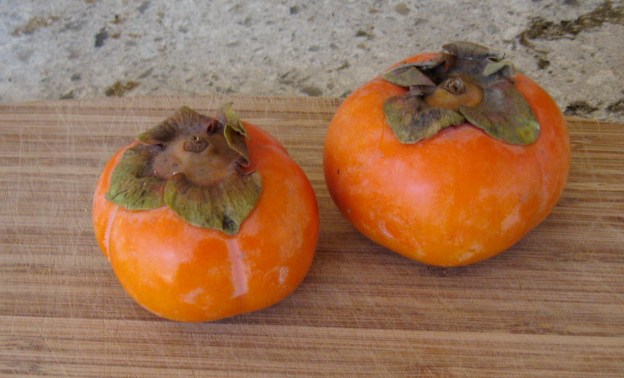
Hachiya persimmons, ripening

Hachiya persimmons, ripening

Jeanne discusses the biology behind the strange winter beauty of persimmon trees and demystifies why eating one before its time is an unpleasant experience.

The holiday seasons of my adult life increasingly include persimmons.  The ‘hachiya’ persimmons on my mother-in-law’s tree in California ripen around Christmas, beginning a conversation about what to do with them, and when they start showing up in the grocery store in late fall, I’m invariably drawn to the plump orange fruits with their handsome green calyxes.  I’ve now learned that persimmons, especially dried, are an important part of many new year celebrations throughout Asia, where there are thousands of persimmon varieties, but I only became acquainted with them when I moved from Denver to go to college in the Bay Area, where some of the Asian varieties are grown.  The bright orange plum-to-apple-sized persimmon fruits stay on the tree until well after the leaves drop in the autumn.  I paid little attention to the persimmon trees on campus—tall specimens of the ‘hachiya’ variety of Asian Diospyros kaki—until the leaves fell to reveal the scraggly branches laden with the orange orbs. Continue reading