The July 2026 issue of Gather and Sow is all about brambles (genus Rubus).
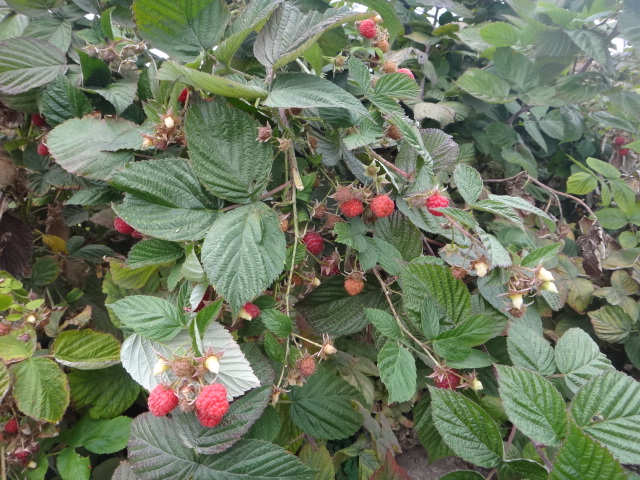
This month we continue our summer romance with the rose family, specifically the cane fruits, or brambles, which include blackberries, raspberries, and their many look-alikes. These cane fruits belong to the branch of the rose family called the Rosoideae, which also includes roses and strawberries. Although these “fruits” are superficially very different, they are all built on the same basic structure: a single flower produces a great many pistils with separate ovaries, each of which becomes a fruit. The many fruits within a flower are then packaged together into a colorful flavorfest of a structure that some people, birds, and mammals like to eat. Ecologically and culinarily they function as a single fruitlike unit, and we casually call them berries (or hips, in the case of roses). But as we saw in June’s newsletter (link), strawberries are not berries at all. They are big fleshy red receptacles covered in small dry achene-type fruits. Rose hips are a bit like inside-out strawberries: their achenes are enclosed by a hollow red shell derived from the hypanthium and other floral parts. In Food for Thought: A ramble through the brambles we compare cane fruits and strawberries, which are very similar, except that cane fruits have invested their bright sweet fleshiness into their fruits instead of their receptacles.
The brambles bring into play another prominent aspect of some of our favorite plants from the rose family: spinescence, including prickles, spines, and thorns. Each of these sharp projections is morphologically and developmentally distinct, and the rose family boasts numerous examples. We break it down in Botany Lab of the Month: Be careful. She’s sharp.
We conclude this month’s newsletter with a selection of relevant media and journal articles in Gleanings and Baker’s Dozen.
 The Botanist in the Kitchen