Category Archives: Recipes

Okra – what’s not to like?

What is hairy, green, full of slime, and delicious covered in chocolate? It has to be okra, bhindi, gumbo, Abelmoschus esculentus, the edible parent of musk. Katherine explores okra structure, its kinship with chocolate, and especially its slippery nature. What’s not to like?
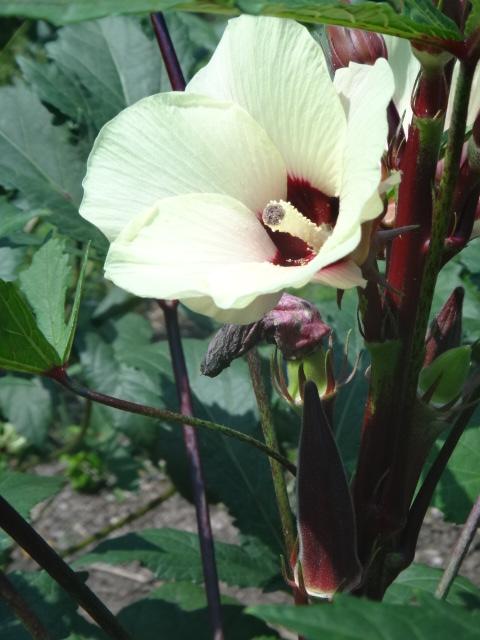
Okra flower with red fruit below

Okra flower with red fruit below

People often ask me about okra slime. Rarely do they ask for a good chocolate and okra recipe, which I will share unbidden. With or without the chocolate, though, okra is a tasty vegetable. The fruits can be fried, pickled, roasted, sautéed, and stewed. Young leaves are also edible, although I have never tried them and have no recipes. Okra fruits are low in calories and glycemic index and high in vitamin C, fiber, and minerals. The plant grows vigorously and quickly in hot climates, producing large and lovely cream colored flowers with red centers and imbricate petals. The bright green or rich burgundy young fruits are covered in soft hairs. When they are sliced raw, they look like intricate lace doilies. In stews, the slices look coarser, like wagon wheels. And yes, okra is slimy. And it is in the mallow family (Malvaceae), along with cotton, hibiscus, durian fruit, and chocolate. Continue reading
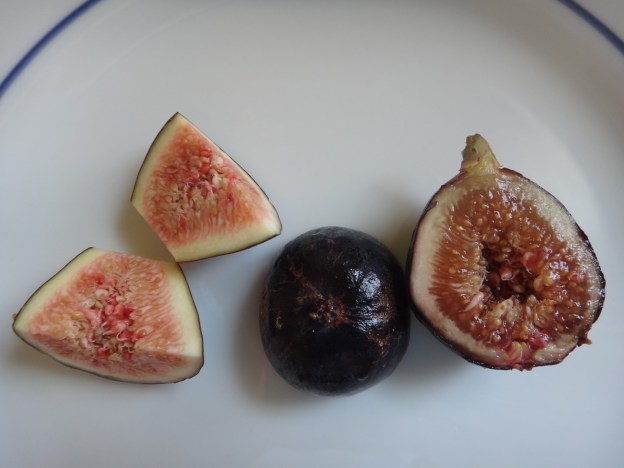
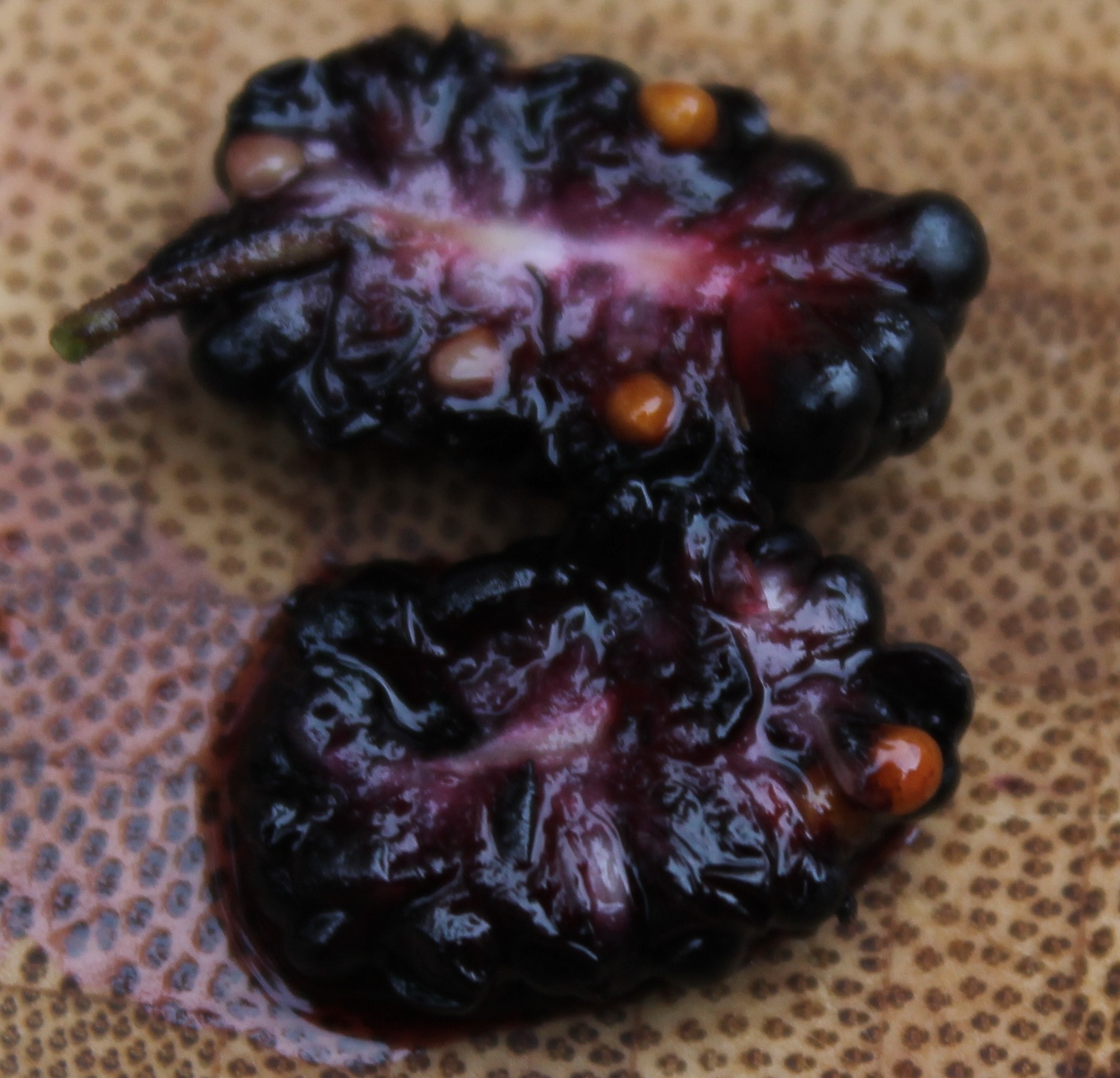
Figs and Mulberries, inside and out

A shorter version of this essay appears in the Autumn 2013 issue of the beautiful, creative online magazine Soiled and Seeded.  Here Katherine and Jeanne explain the topological relationship between figs and mulberries and do a little investigative journalism.

Mulberries

Mulberries

Figs and mulberries are both gorgeous, sexy fruits, but in very different ways. At first blush a mulberry could be the fragile hot-mess cousin of a blackberry, while figs are classically sensual fruits, like marble nudes teetering on the edge of vulgar. For all their fleshy assertiveness, both fruits keep their secrets; and it takes more than a long, intense gaze to uncover their close relationship and know what makes them sweet.  Mulberries may look like blackberries (and share a taxonomic order), but they are built from different plant components. The true siblings are mulberries and figs (both in family Moraceae), and at heart they are very much alike, although figs are clearly the more introverted of the two. Continue reading

Evolution of Lemon Flavor

A batch of lemon balm-lemon verbena syrup reminds Jeanne of the multiple evolutionary origins of lemon flavor.

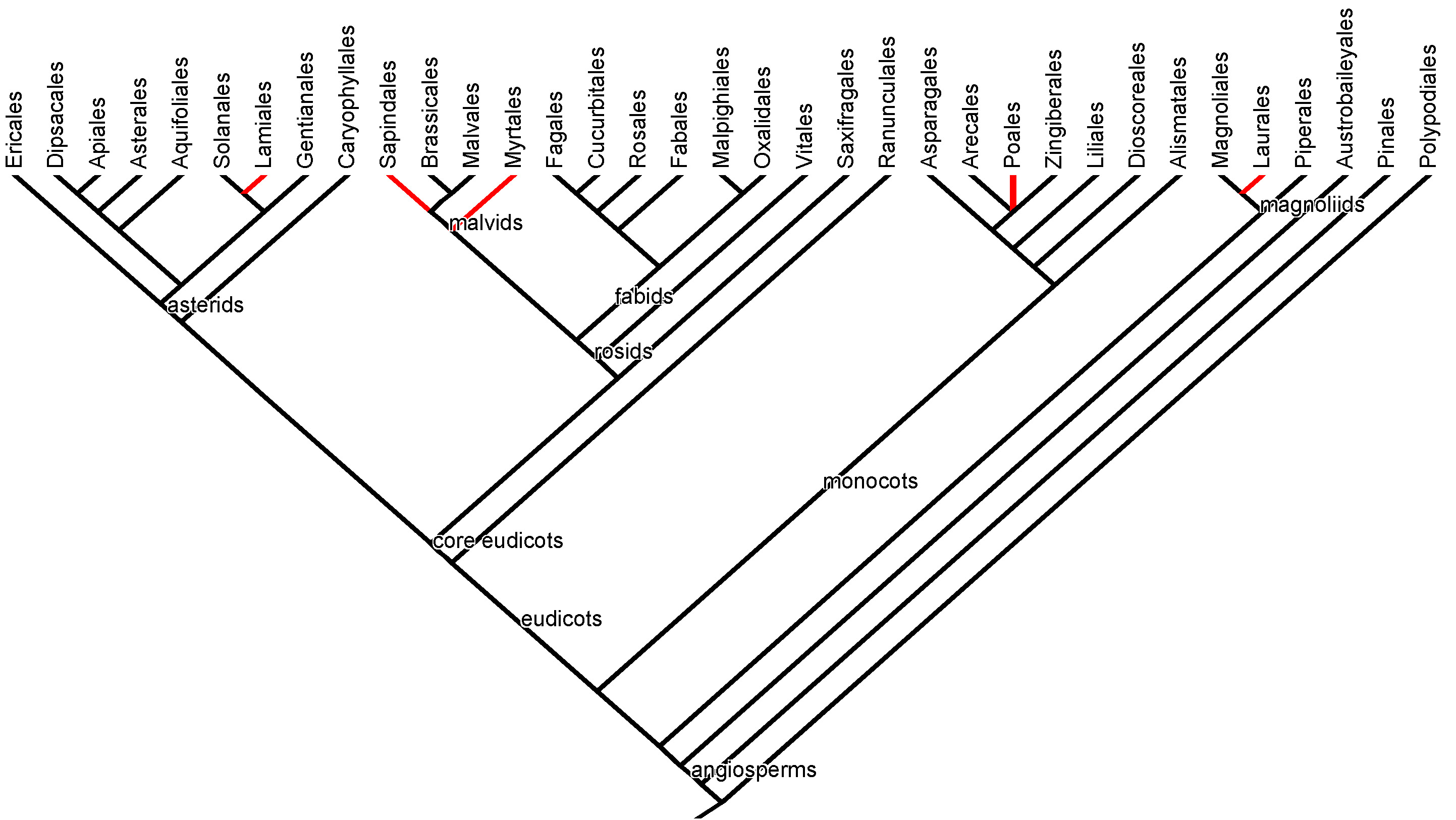
DSC00796The citrus lemon itself is only one of many plant species that lends its namesake flavor or fragrance to our food and drinks.  Lemon flavor primarily comes from a few terpenoid essential oils:  citral (also called geranial, neral, or lemonal), linalool, limonene, geraniol, and citronellal.  The production of one or more of these essential oils has independently evolved multiple times in species on widely separated branches of the plant phylogeny (see figure).

Phylogeny of plant orders with edibles (click the tree to enlarge). Orders with species with lemony essential oils are highlighted in red.  For a refresher on reading phylogenies, please see our food plant tree of life page.

Phylogeny of plant taxonomic orders with edibles (click the tree to enlarge). Orders with species with lemony essential oils are highlighted in red. For a refresher on reading this phylogeny, please see our food plant tree of life page.

Continue reading

Making ratatouille like a botanist

The story of the nightshades is usually told as a tale of European explorers, New World agriculturalists, and a wary bunch of Old World eaters.  But what about the birds?  And the goji berries?  Jeanne and Katherine introduce you to the Solanaceae family and walk you through the botany to be observed while making ratatouille, the classic French collision of Eastern and Western nightshades.

Can you imagine Italian cuisine without tomatoes? The Irish without potatoes? Chinese cuisine without spicy, fruity chiles?  Such was the case prior to the discovery of the New World nightshades (family Solanaceae) by sixteenth-century Spanish explorers.  And they couldn’t help but run into them.  Solanaceae is a huge family, with over 100 genera and nearly 2500 species, most of which are in Central and South America. Continue reading

Pear grit and the art of aging

Nostalgia emanates from a basket of pears, inspiring Katherine to explain what makes up these glorious, gritty, and gorgeous late-summer fruits.

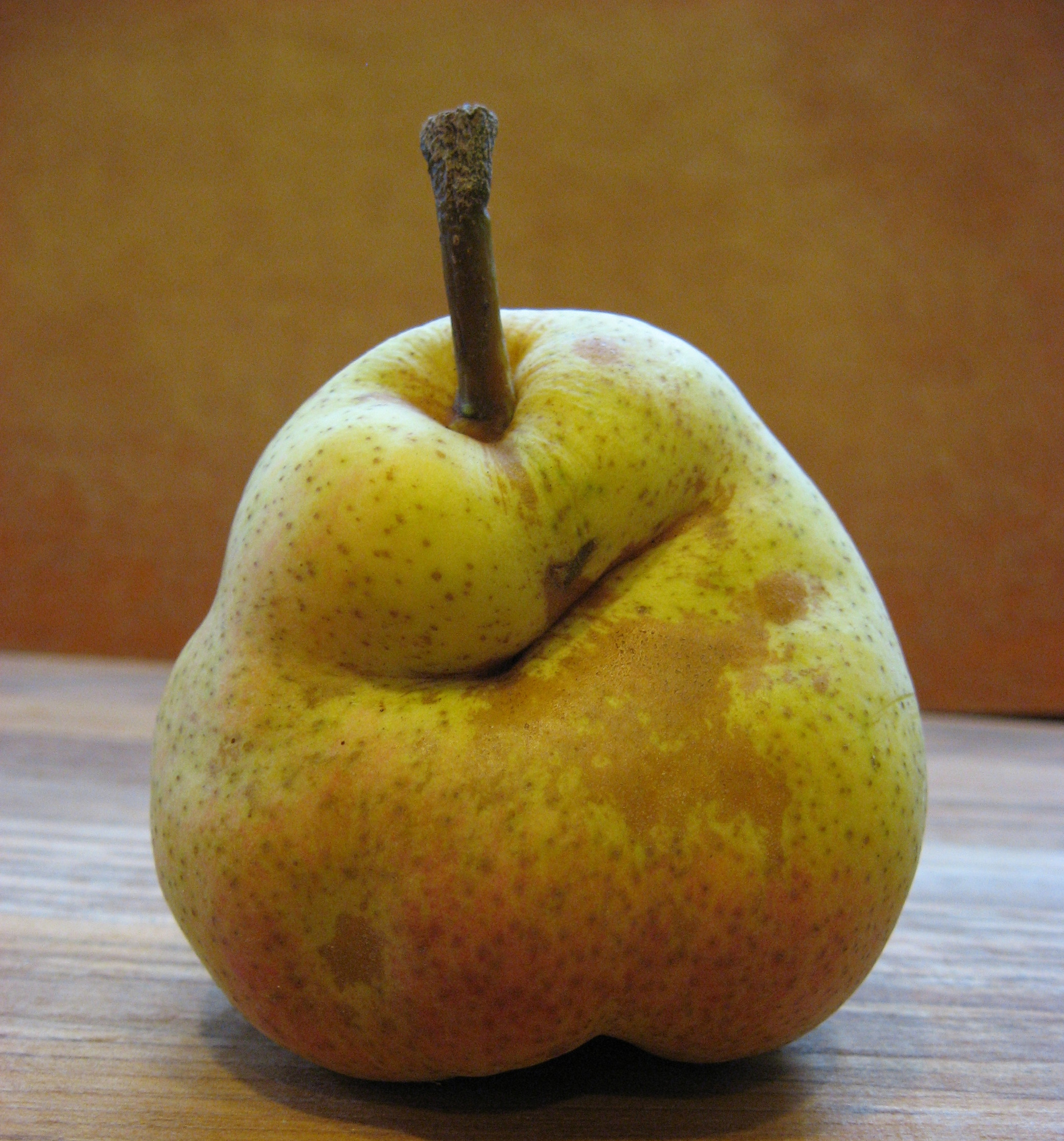
Last week a dear friend conjured an entire autumn for me when she handed me one of her pears.  She had picked it a few days prior from one of the small espaliered trees that guard the outside of her bedroom wall and overlook her garden.  It was pale buttery gold with a pink blush, soft and honey-flavored.  A month past the solstice, we were still able to enjoy the low sun well into early evening as we sat on her deck and gazed over the garden, savoring the fruit.Rosaceae talking pear

Bartlett pears, like my friend’s, ripen in the summer and yet they herald the fall.  They appear, and we start the inevitable tumble towards apples, wool socks, and the bittersweet baseball postseason.  Other popular varieties, such as Bosc and d’Anjou, tend to arrive later, when we have already come to terms with shorter cooler days.

I love apples, but they are not as emotion-laden for me.  Whereas apples seem timeless, even summer pears carry an old fashioned patina.  They evoke a time when canning was a skill necessitated by the Depression, but which still made a lot of good sense.  My grandmother must have spent a thousand hours canning the soft sweet pears from her trees.

Pears also know how to age right.  Apples are harvested ripe from the tree, but pears should be taken when they have reached their full size and before they are ripe.  My friend always picks her pears before the squirrels can mark them with bite-sized divots, a practice that also happens to keep them from becoming mealy on the tree.  She sent me home that day with a bag of firm green Bartletts and instructions to hold them in a bag in my kitchen for a couple of days.  Summer varieties don’t require chilling, but d’Anjou and Comice pears benefit from a month of nearly freezing temperatures, followed by ripening at room temperature (Stebbins et al).  The proper aging of pears is all about managing the activity of enzymes that alter various compounds and break down cell walls.  Such treatment would ruin high-maintenance peaches, which are horrified by the thought of getting old and don’t take well to chilling. Continue reading

Caterpillars on my crucifers: friends or foes?

A high glucosinolate (putatively anti-cancer) broccoli variety is now on the market.  Jeanne wonders if caterpillar herbivory-induced increases in glucosinolates can match it.  The answer is unsatisfyingly complicated. 

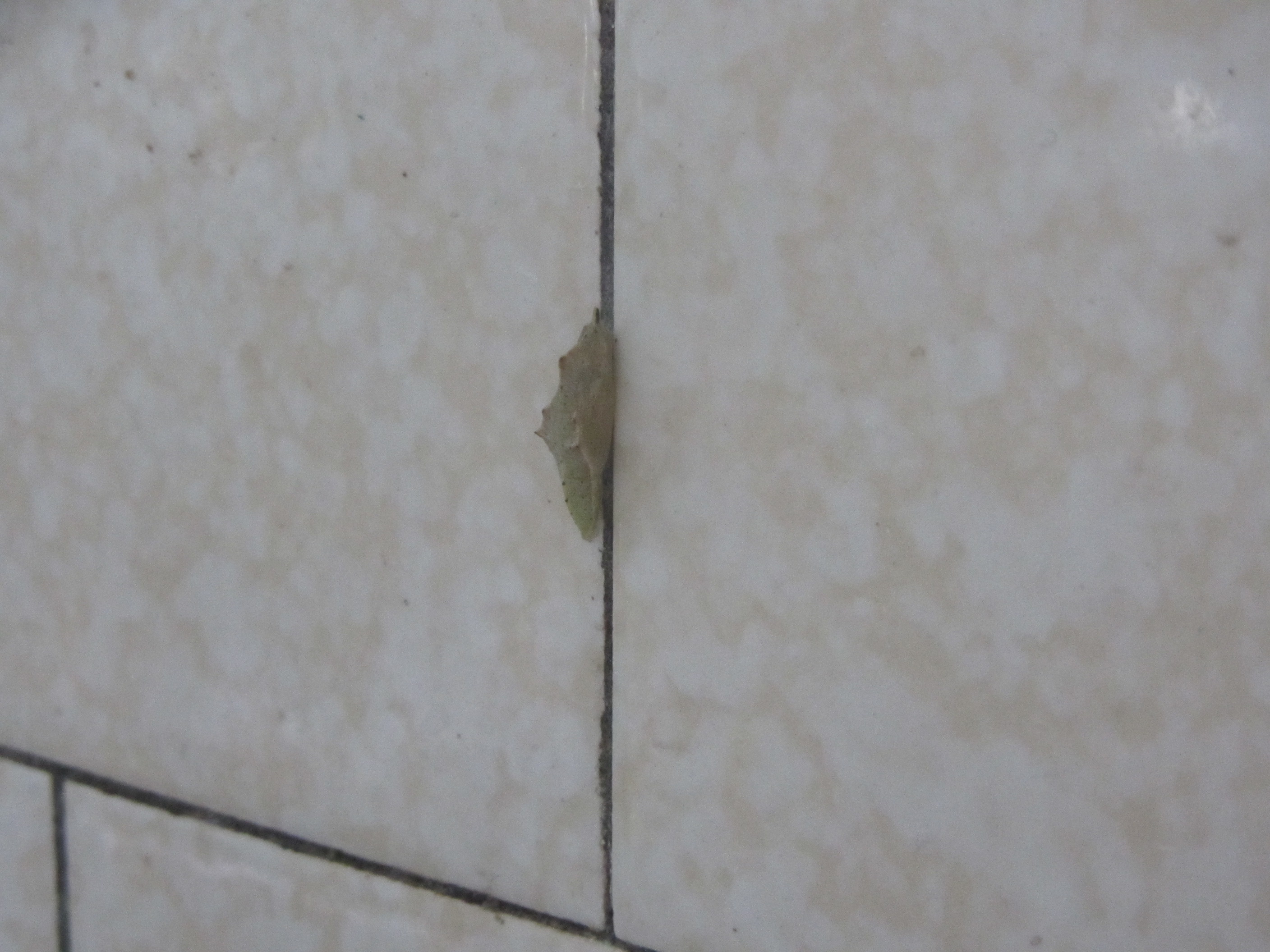
Cabbage butterfly pupa on the tile above my sink. A survivor from washing crucifers from the garden.

Cabbage butterfly pupa on the tile above my sink. A survivor from washing crucifers from the garden.

There are three primary reasons why I haven’t launched aggressive war on the cabbage butterfly (Pieris rapae) caterpillars munching on the cruciferous veggies in my garden, even though I don’t like them:  (1) garden neglect; (2) hostility towards most pesticides; and (3) bonhomie toward caterpillars by my toddler.  There is also a fourth reason.  I know that in general most plants increase production of chemical defense compounds when they detect that they’re being attacked by pathogens or herbivores (Textor and Gershenzon 2009).  Some of these defense compounds have been shown to be beneficial for human health, including those in crucifers.  I’ve been wondering for a while if those caterpillars were actually enhancing the value of the tissue they didn’t consume.  A recent report about a high-defense-compound laden variety of broccoli prompted me to do some research into the issue.  I’m left with more questions than answers. Continue reading

How to make an artichoke: the facts about bracts, part 1

Inspired by spring and the appearance of both artichokes and asparagus, Katherine explains artichoke morphology in the first of two posts about bracts and scales.

Artichokes don’t exactly look like food, and their name in English is homely and offputting.  The scientific name is no better.  Cynara cardunculus variety scolymus rolls off the tongue like a giant ball of tough spiny bracts.  I’m not ready to call it an onomatopoeia, even though artichokes are giant balls of tough spiny bracts.  And the word “bract,” on its own, is just flat-out ugly.  But artichoke bracts have delicious meaty bases, and they protect the tender inner part of the bud which we call the heart, so I am a C. cardunculus var. scolymus bract fan. Continue reading

Greens: why we eat the leaves that we do

Jeanne reveals which branches of the evolutionary tree of plants bear edible leaves and speculates about why that is.

Giant coconut palm (Cocos nucifera) fronds dwarf me

Giant coconut palm (Cocos nucifera) fronds dwarf me

Most of the 300,000 + plant species have leaves, and the function of all of them is to perform photosynthesis.  They are the ultimate source for all of the oxygen and food for the rest of the food chain and help regulate the global carbon and water cycles.  They are also nutrition superstars.  To figure out why greens are good for you and whether all leaves are equal in this regard, we need to take quick look at global leaf structural variability and broad evolutionary patterns in the species that make their way onto our tables. Continue reading

A brief history of gluten

Victory with creating a gluten-free quick bread recipe inspires Jeanne to give you a brief primer on the evolutionary history of gluten within the grass family. 

We were perhaps a little too enthusiastic this fall in our apple picking at a local orchard and our acquisition of interesting squash at our farmer’s markets.  Our freezer now contains many bags of applesauce and squash puree.  We must now “do something,” as we say, with all of it, meaning use the purees as ingredients.  Lately I’ve been working on incorporating the purees into nutritious (low sugar, high protein, whole grain) quick breads.  On my doctor’s recommendation, that quick bread also needs to be gluten-free.  Increasing appearances of the phrase “gluten free” on restaurant menus and product labels are noble efforts to accommodate the needs of people who have celiac disease or other dietary sensitivities to gluten.  Baking without gluten is a challenge, as gluten is what gives wheat dough its elasticity and allows yeasted wheat bread to rise.  The internet makes gluten-free baking more accessible by the day, but I haven’t yet found someone else’s recipe that really does what I want, so I’ve been working on my own.  I’m fairly pleased with the latest result (below) and thought I would use the occasion to give you a brief evolutionary history of gluten and the botanical family that makes it:  the grasses. Continue reading

Of sweet potatoes and putting down roots

On a hunt for a traditional Thanksgiving tuber, Katherine discovers what it takes to root your own sweet potatoes.  Here she explains how sweet potatoes are put together, which anyone can observe in the kitchen.

The Sunday before Thanksgiving – the first Thanksgiving in 19 years that I have not spent with my family in Georgia – I was on a hunt for sweet potatoes.  Not a single one of my favorite vendors at the Mountain View farmers market grew them this year.  Finally, I questioned Luis Miranda of Wholeness Farms, who has always given me clear and patient explanations of many aspects of farming.  In his charming Nicaraguan accent, he simply said that sweet potatoes are a “long crop.”

Sweet potatoes of all kinds – orange, white, or purple, garnets, Beauregards, Georgia jets, and white stars – are members of the species Ipomoea batatas, in the morning glory family, Convolvulaceae. Continue reading