The most political vegetables: A whirlwind tour of the edible crucifers

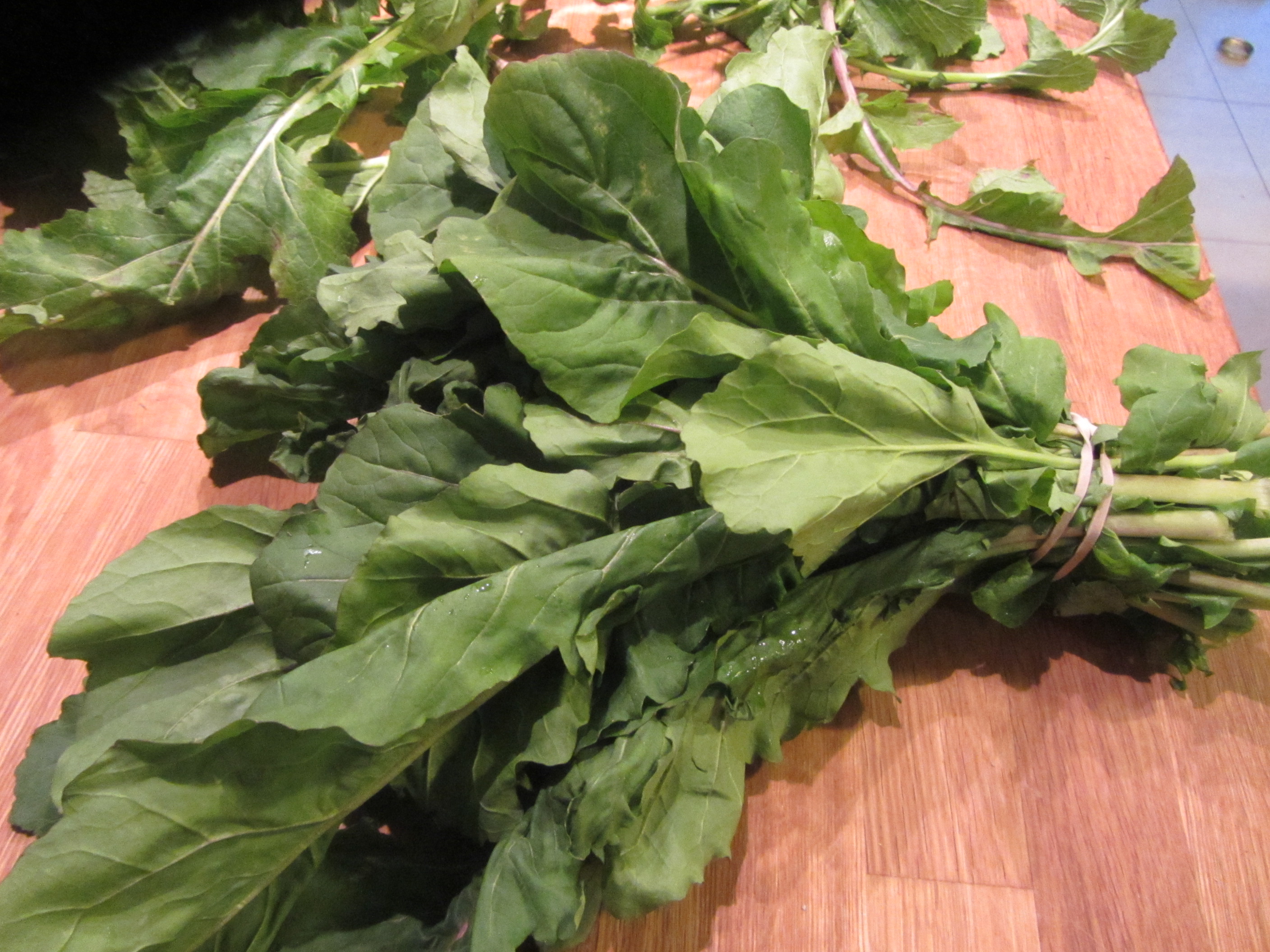
arugula

Jeanne provides an overview of the cultivated brassicas.

Two days after the re-election of Barack Obama, the arugula at the farmer’s market reminded me of John Schwenkler’s excellent commentary from the 2008 campaign season on political trends in food choices, taking issue with Republican opposition to arugula. Arugula was the subject of a gaffe by then-candidate Obama.  Afterward the vegetable joined lattes in the pantheon of foodstuffs entirely in custody of liberals, according to some pundits on the political right.

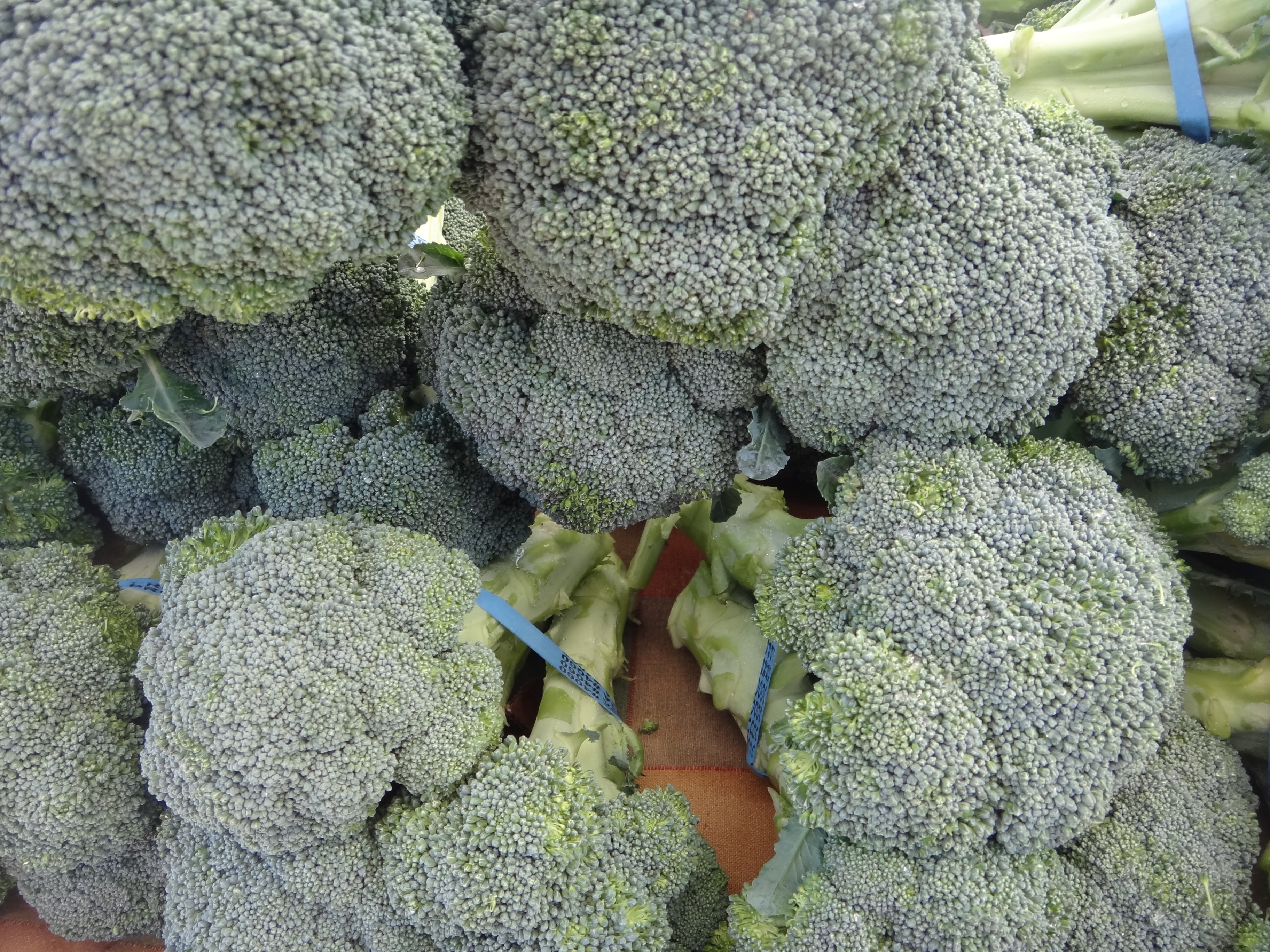
broccoli

Arugula was not the only, or even the most recent, brassica (a species from the mustard family, Brassicaceae) to be dragged into the American political fray.  Marion Nestle has a great commentary on two memorable instances when broccoli entered national political discourse, first when George H. W. Bush disavowed the vegetable, and then recently when Antonin Scalia turned the vegetable into a symbol of government imperialism during the Supreme Court’s consideration of the Affordable Care Act.

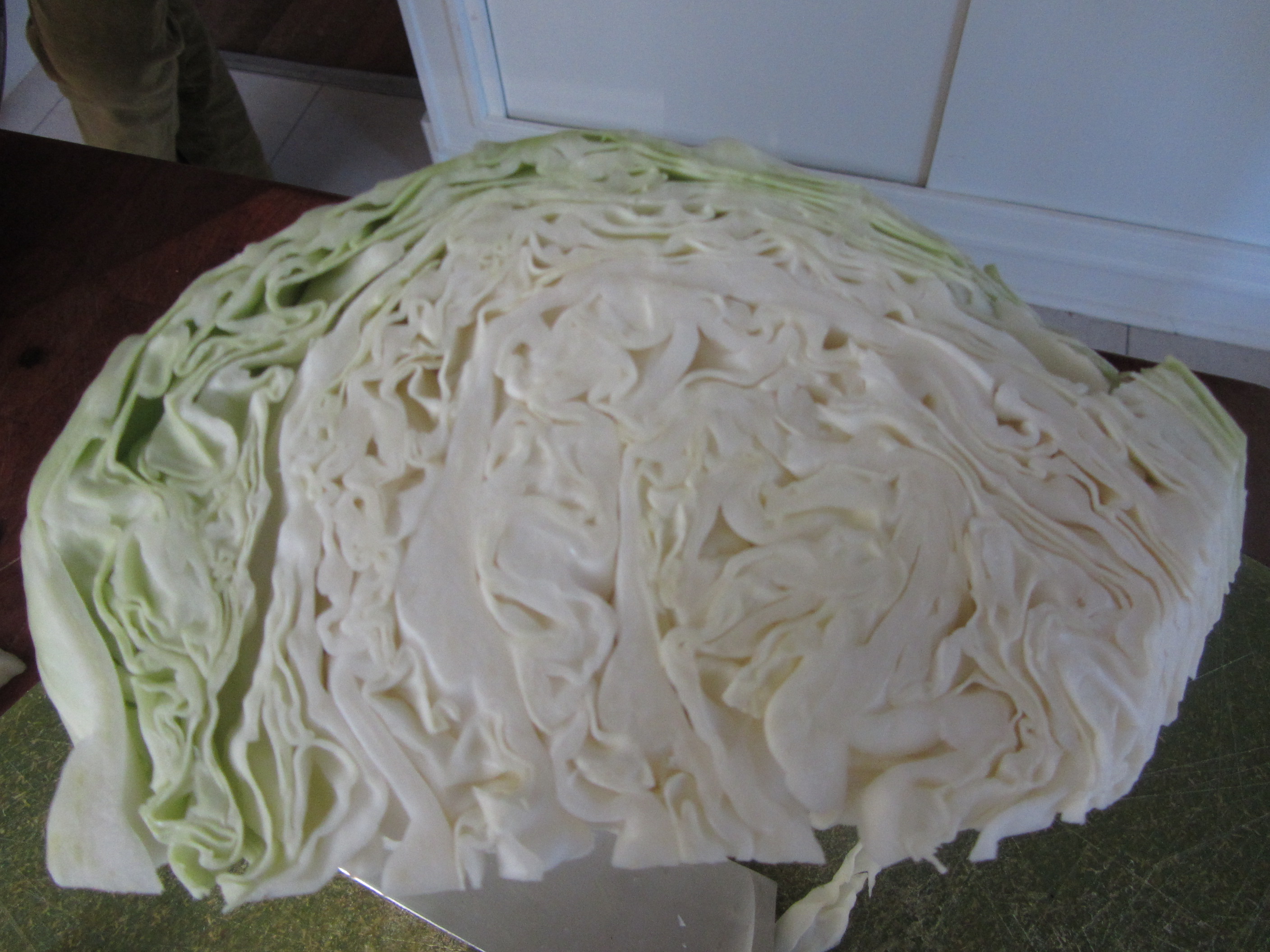
cabbage

In July 1948 Truman called both houses of Congress back from recess for what is now known as the Turnip Day Session, starting on, as he said, “what we in Missouri call Turnip Day,” the 25th of July.  The designation comes from an old Missouri saying: “On the 25th of July, sow your turnips, wet or dry.”  During World War I sauerkraut in the United States for a time became “Liberty cabbage,” a marketing predecessor to the Freedom Fries in the George W. Bush-era congressional cafeteria.  The re-labeling came from American manufacturers of sauerkraut, the German name for the lacto-fermented salted cabbage popular in much of Europe and Asia, who worried that Americans would reject a product with a German name (incidentally, though smelly, making your own sauerkraut is easy and yields satisfying results).

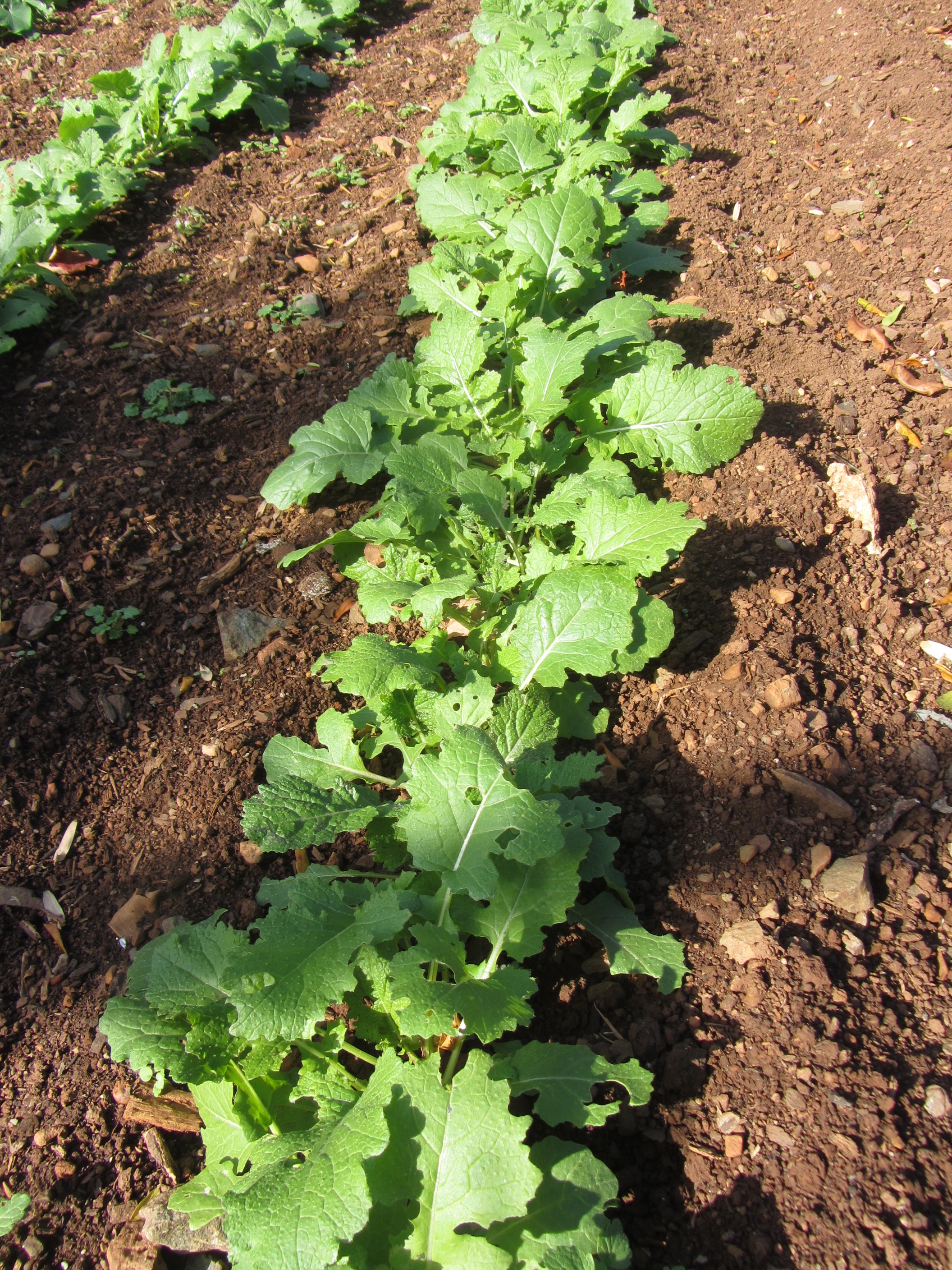
watercress

The relative frequency of brassica appearances in political discourse reflects their abundance in the modern grocery cornucopia.  In previous posts we discussed the numerous varieties of Brassica oleracea (including kale, collard greens, Chinese broccoli, Brussels sprouts, kohlrabi, cabbage, broccoli, and cauliflower) and other Brassica species (turnips, rutabagas, rapini, napa cabbage, tatsoi, bok choy, mizuna, mustard greens, mustard seeds, mustard or canola oil).  This post completes our whirlwind tour of Brassicaceae food plant diversity. Continue reading

Thanksgiving turnips and the diversity of the genus Brassica

Jeanne briefly describes the cultivation history and botany of Brassica rapa, B. napus, B. nigra, and B. juncea to round out our cursory tour of the extraordinary genus Brassica.  Michelle offers a recipe highlighting a vegetable likely present at the first Thanksgiving:  the turnip, an exceptional cultivar of B. rapa.
White Tokyo turnips and purple-top turnips

Along with the turkey, stuffing, potatoes, green beans and cranberry sauce, Brussels sprouts have become something of a Thanksgiving staple.  None of these dishes, however, were part of the original harvest feast shared by the Pilgrims and Wampanoag in Plymouth Colony in 1621.  A close relative of Brussels sprouts, however, likely had an honored place at the table:  turnips.  The Pilgrims chose the tuberous vegetable to occupy precious cargo space in the holds of their ships bound for the New world and grew them in their Plymouth Colony gardens.  Turnips were probably also on most Americans’ Thanksgiving menus when President Lincoln made the holiday official in 1863.  During that first Thanksgiving turnips served as a sole representative of a genus, Brassica, that has one of the most impressive radiations of cultivated species on the planet.  Its extensive domestication happened primarily in Europe and Asia.  While Native Americans may have exploited weedy little native species in same family as the now-familiar Brassica (the mustard family, Brassicaceae), there is little evidence that they cultivated them or subjected them to artificial selection.

Row of turnips in the Monticello garden

Descriptions of turnips date to Alexander the Great’s vast kingdom, which spanned much of central Eurasia.  The vegetable’s domestication history earlier than that is not well known, but turnips likely made their way to western Europe from an Asian origin, along with several other well-known varietals of the same species, Brassica rapa.   In a previous post we discussed the numerous varieties of Brassica oleracea (including kale, collard greens, Chinese broccoli, Brussels sprouts, kohlrabi, cabbage, broccoli, and cauliflower).  The radiation of Brassica rapa into several morphologically variable domesticated vegetables across its broad native range in Europe, Asia and North Africa is almost as spectacular as that of B. oleracea.  Turnips, Italian rapini, and Asian cultivars bok choy, tatsoi, mizuna greens, napa cabbage, and purple mustard greens are all varieties of B. rapa.  In addition to B. oleracea and B. rapa, other important Brassica species in the human diet are Brassica napus (rutabaga and oilseed), Brassica nigra (black mustard) and Brassica juncea (mustard greens).  As such, the single genus Brassica alone accounts for a respectable fraction of the vegetables in a well-stocked produce section. Continue reading

The extraordinary diversity of Brassica oleracea

Before the caterpillars attacked: Red Russian kale seedlings

Jeanne turns her frustration with caterpillars in her garden into an exploration of the botany behind an extraordinary species:  Brassica oleracea.

White cabbage butterflies (Lepidoptera: Pieris rapae) decimated the fall kale crop in our garden.  To be fair, the abundant green caterpillars did not consume the entire blade of every leaf.  The remaining nibbled leaves, however, in my husband’s view, no longer resembled food so much as a caterpillar farm that would be tedious to turn into food.  He ripped out the caterpillar farm, threw it on the compost bin, and replaced it with lettuce.  Unlike kale, which is in the mustard family (Brassicaceae), lettuce is in the sunflower family (Asteraceae) and is therefore not even remotely attractive to white cabbage butterflies.

Caterpillar damage on young green curly kale in the garden at Monticello

I was tempted to save the hole-riddled leaves from their compost fate, in part because I know that the munching of the caterpillars actually increased the foliar concentration of some of the compounds that contribute to kale’s nutritious reputation, and also because plummeting autumn temperatures impart an extraordinary sweetness to kale and the other cruciferous vegetables that are all actually varieties of the same species, Brassica oleracea: cauliflower, cabbage, kohlrabi, Brussels sprouts, Chinese broccoli, and collard greens.  The details of the chemical consequences of caterpillar consumption will soon get a post all their own.  This post is dedicated to the botany and evolutionary biology behind the amazing diversity of B. oleracea. Continue reading

Varieties of the pepper experience

Chili, black pepper, white pepper, and Sichuan pepper

Black pepper, pink peppercorns, chili pepper, Sichuan pepper – except for being “hot,” these spices have as little in common as Sergeant Pepper and Pepper Potts.  Their homelands are scattered across the world, and they were spread through distinct trade routes.  They are not closely related; they belong to families about as far apart as possible on the phylogenetic tree below.  They even aim their heat at different sensory receptors in your mouth. Continue reading

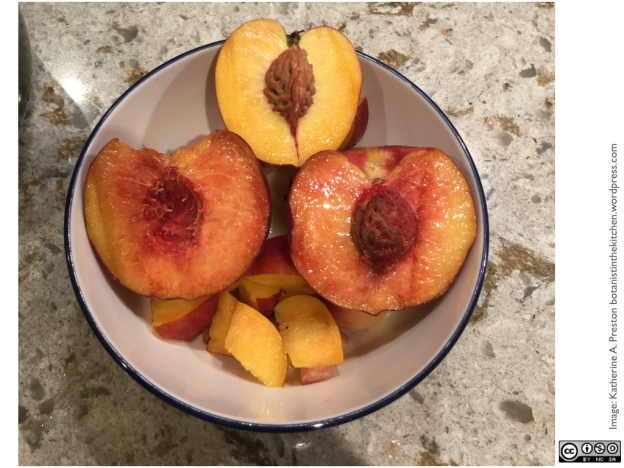
Yellow freestone peaches, one with a bit of anthocyanin in its flesh

The Stone fruits of summer

The scent of ripening peaches spurs Katherine’s musings on the botany
of stone fruits

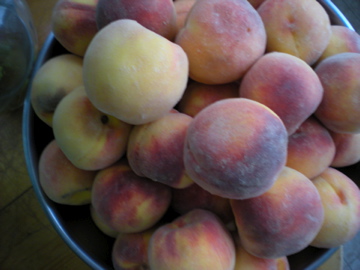
Fragrant peaches ripening on window sills and countertops pull me right back into the heart of my childhood summers.  They always arrived in a huge box from Georgia, sent by my grandmother in the hope of drawing my parents back to their native state. Her other lures included Vidalia onions in April and Claxton fruitcakes in November, but peaches were definitely her best shot. The peaches were gorgeous, and their ripe flavor was incredibly complex and vivid, but their peak was ephemeral.  After my sister and I had spread them all out on newspapers, the whole sprawling array had to be checked at least two times a day and sorted by ripeness. Peaches were never allowed to touch each other.  On some hot days, peach tending took on the urgency of triage, with fruits passing from ripe to “sharp” to downright alcoholic in one long afternoon.

Peaches, nectarines, plums, apricots, and cherries are sometimes called stone fruits because of their pits, or stones.  Along with almonds, they are all in the genus Prunus which belongs to the Rose family – Rosaceae.  Several other familiar fruits come from the rose family but are not stone fruits. Continue reading

Do peaches belong in the fridge?

Some people just cannot bring themselves to refrigerate peaches. Storing peaches lovingly at room temperature is said to coax out the best in peach scent, flavor, and texture. But treating peaches this way does take a lot of time and vigilance, as I detail elsewhere. Reliable authorities – peach packing houses and state extension agencies – recommend refrigerating peaches once they become ripe, but some people would rather risk losing fruit to rot than let them get cold. But does it matter? Can peaches be stored in the fridge to slow their decline without compromising their peak? Continue reading