Author Archives: Jeanne L. D. Osnas

Our Easter Bunny is a Botanist

Plant-dyed Easter eggs inspire a glimpse at the diversity of plant pigments.

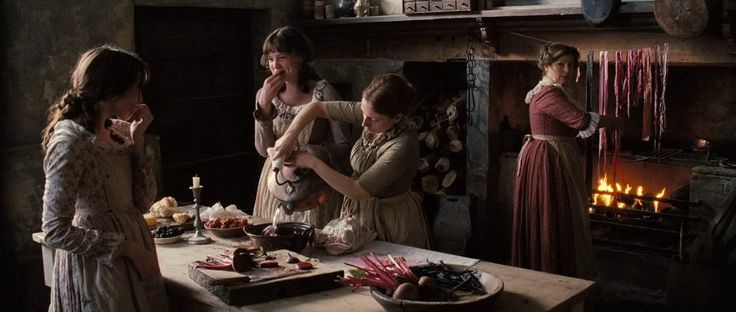
(scene from Pride and Prejudice of dying ribbons with beets: https://www.pinterest.com/pin/374150681515259286/)

(scene from Pride and Prejudice of dying ribbons with beets)

Pigments serve a variety of roles in plants. Many pigments have physiological roles within plants and protect plant tissues from sunburn and pathogens and herbivores (see review by Koes et al. 2005). Most noticeably, however, their brilliant colors attract animal pollinators to flowers and seed dispersers to fruit. Humans are also interested in plant pigments, in part because they color and sometimes flavor our food, are potentially medicinally active, and have been used as natural dyes and paints for millennia.

red cabbage

red cabbage

Last weekend I made some natural Easter egg dyes from turmeric and beets (I followed these instructions). We also considered making dyes from red and yellow onion skins or red cabbage, but we kept it simple. This handful of plants used to make cheap, easy, homemade dyes can give us some insight into of the chemical and evolutionary diversity of plant pigments. Continue reading →

Hollies, Yerba maté, and the botany of caffeine

Yerba maté, the popular herbal tea from South America, is a species of holly. It’s also caffeinated, a characteristic shared by only a small number of other plants.

CRW_1675

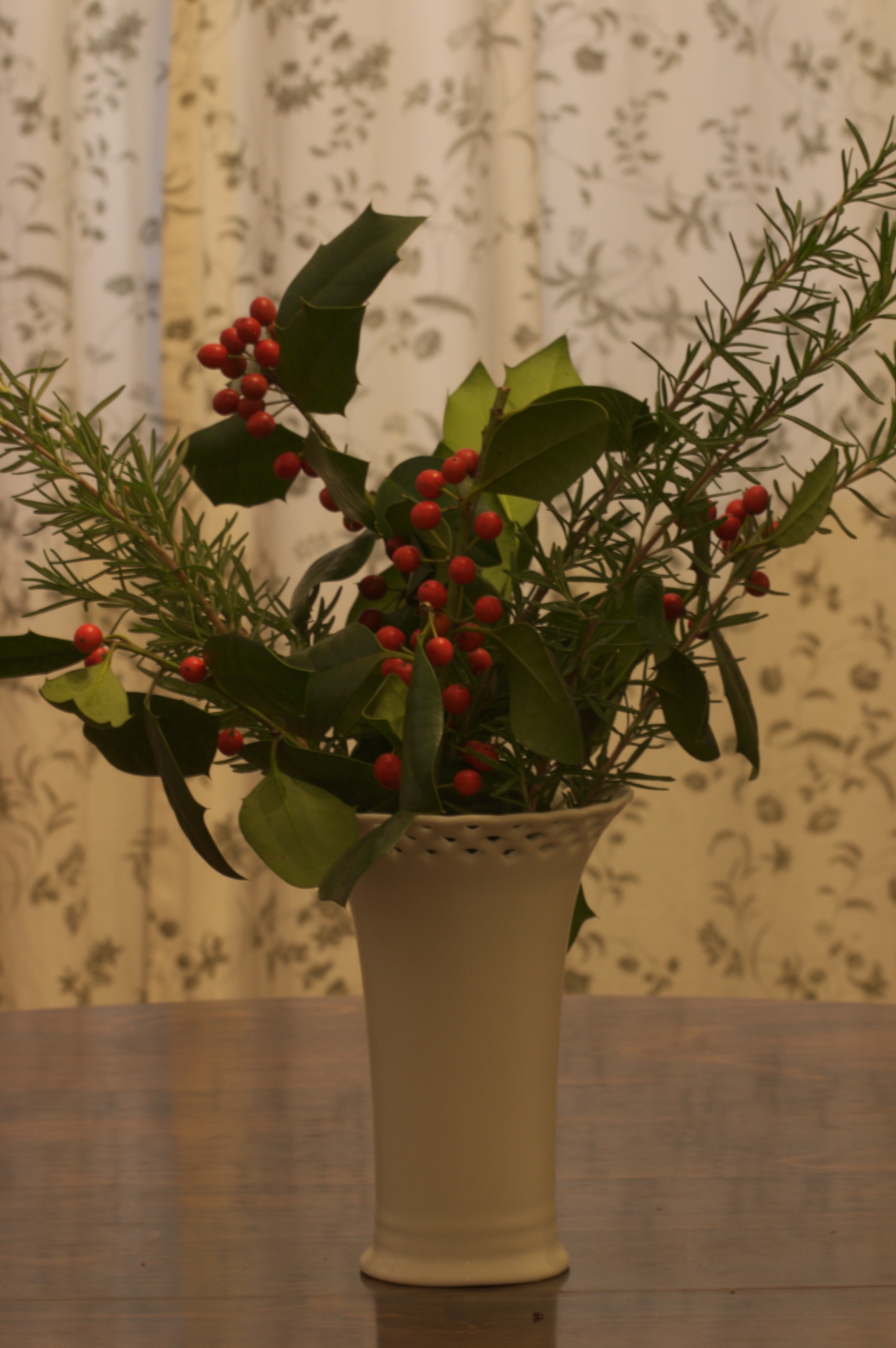
English holly. Photo by K. Bills

Along with conifer trees and mistletoe, hollies are a botanical hallmark of the winter holiday season in Europe and the United States. Most hollies are dense evergreen shrubs or small trees and produce beautiful red fruits that stay on the plant through the cold winter months. Sprays of the dark green foliage grace festive decorations, and wild and cultivated hollies punctuate spare winter landscapes. Especially popular in winter, too, are warm beverages. One of the most popular, at least in South America but increasingly elsewhere, is yerba maté. It is a seasonally appropriate choice because the maté plant is a holly. Unlike the decorative hollies, usually American (Ilex opaca) or English (Ilex aquifolium) holly, maté (Ilex paraguariensis) is caffeinated. This puts it in rare company, not only among hollies, but among all plants. Continue reading →

Cranberries, blueberries, and huckleberries, oh my! And lingonberries, billberries…

Flavorful and juicy thought it may be, Thanksgiving turkey, for me, is merely the vehicle for the real star of the meal: cranberry sauce. And cranberry is in the same genus as blueberries, lingonberries, huckleberries, and billberries. And they all make their own pectin. Let us give thanks this holiday season for Vaccinium.

Cranberry sauce is my favorite staple item at our big holiday dinners. Long-prized by indigenous North Americans, cranberries would have been in the diet of those Native Americans participating in the first Thanksgiving if not part of the meal itself. When the fresh cranberries hit the stores in late fall, we stock up. Cranberries, however, are not the only member of their genus that is perennially in our freezers or in our annual diet: blueberries, many huckleberries, lingonberries, and billberries are all in the large genus Vaccinium (family Ericaceae, order Ericales). Continue reading →

Nasturtiums and the birds and the bees

Hummingbirds and ancient bees are responsible for the color and shape of nasturtium blossoms and have a unique view of them, explains Jeanne over salad. 

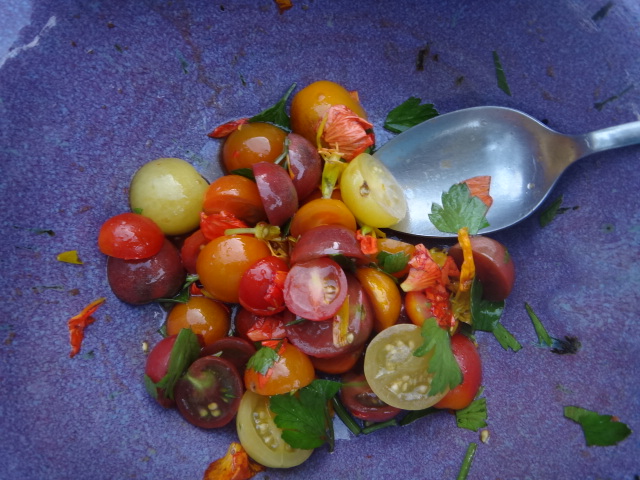
Nasturtium flowers cut into tomato salad with parsley

Nasturtium flowers cut into tomato salad with parsley

Fall frost hasn’t yet claimed our nasturtiums (Tropaeolum majus; Tropaeolaceae family). The large, colorful blooms amidst the round leaves are still spilling over planting boxes.  All parts of the plant are edible and boast spicy mustard oil glucosinolates, betraying the plant’s membership in the order Brassicales, along with the cruciferous vegetables and mustard in the Brassicaceae family, capers (Capparaceae), and papaya (Caricaceae; try the seeds, as suggested here). I’ve heard that the immature flower buds and immature seed pods can be pickled like capers, but I haven’t tried it yet. Mostly I use the flowers, throwing a few in a salad or chopping them coarsely with other herbs and stirring them into strained yogurt or butter to put on top of roasted vegetables or lentils. In addition to the mustardy kick, the sweet flower nectar adds to these dishes. Continue reading →

Evolution of Lemon Flavor

A batch of lemon balm-lemon verbena syrup reminds Jeanne of the multiple evolutionary origins of lemon flavor.

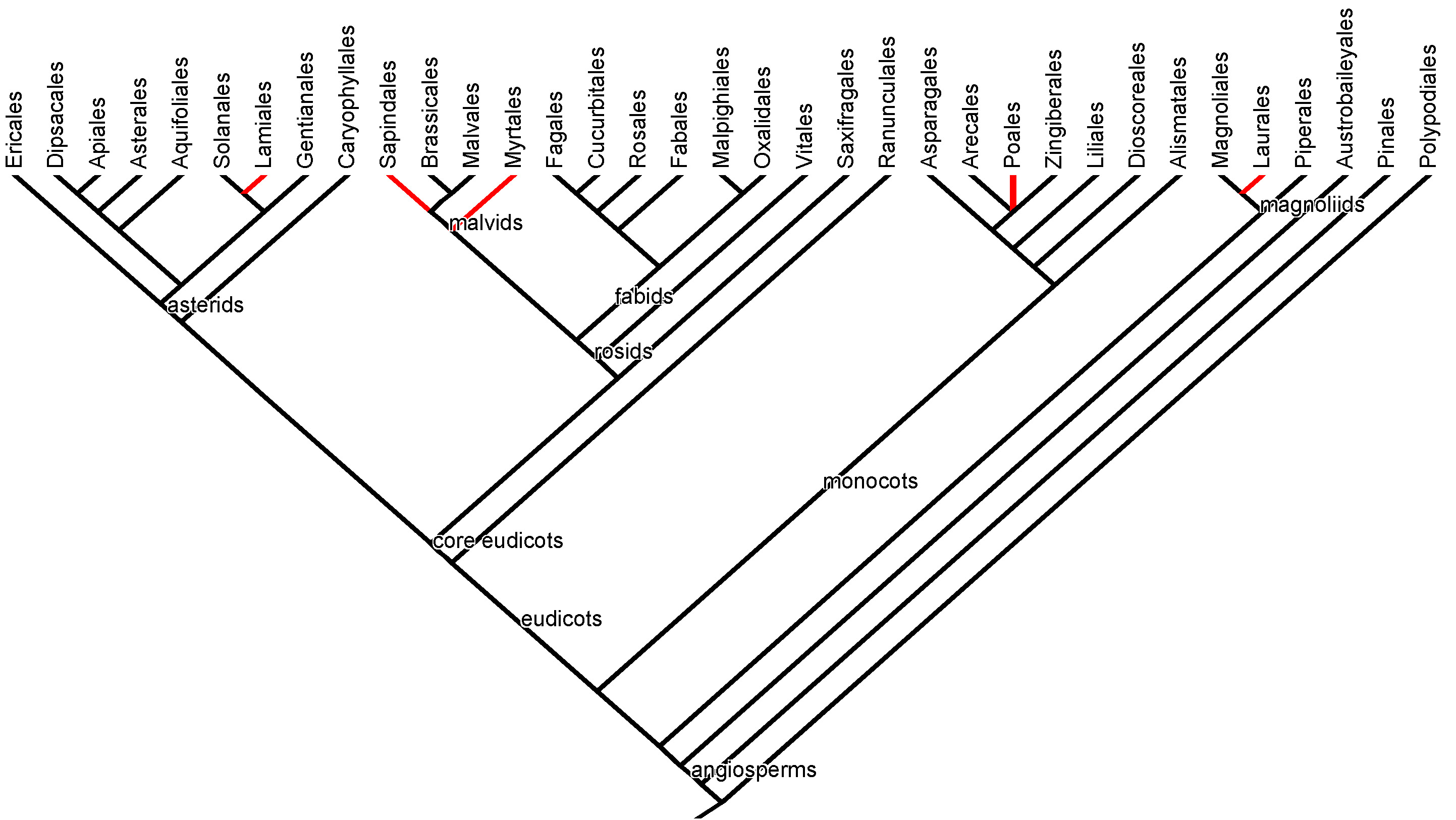
DSC00796The citrus lemon itself is only one of many plant species that lends its namesake flavor or fragrance to our food and drinks.  Lemon flavor primarily comes from a few terpenoid essential oils:  citral (also called geranial, neral, or lemonal), linalool, limonene, geraniol, and citronellal.  The production of one or more of these essential oils has independently evolved multiple times in species on widely separated branches of the plant phylogeny (see figure).

Phylogeny of plant orders with edibles (click the tree to enlarge). Orders with species with lemony essential oils are highlighted in red.  For a refresher on reading phylogenies, please see our food plant tree of life page.

Phylogeny of plant taxonomic orders with edibles (click the tree to enlarge). Orders with species with lemony essential oils are highlighted in red. For a refresher on reading this phylogeny, please see our food plant tree of life page.

Continue reading →

Super styled

Corn silks are annoying, but they’re also amazing. The longest styles on the planet don’t make it easy for corn pollen to do its job.  Gain new respect for your corn on the cob. 

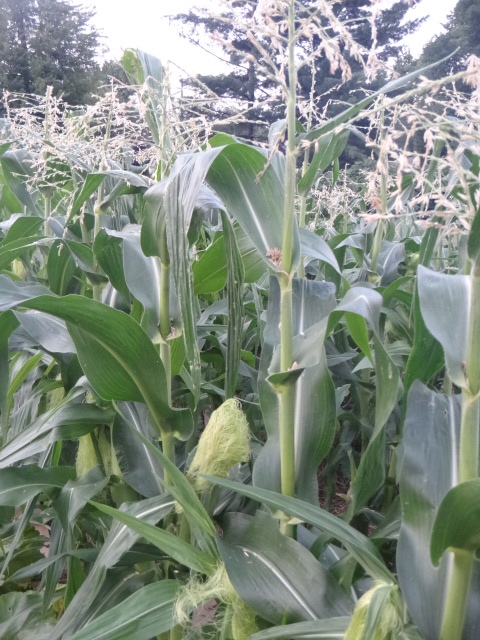
Corn plant. Tassels with male flowers on top, ears with exposed silks in the middle

Corn plant. Tassels with male flowers on top, ears with exposed silks in the middle

Fresh corn (Zea mays, Poeaceae) is a summertime treat. Shucking corn silks, though, can be a pain.  Corn silks, however, are amazing, and maybe knowing why will ameliorate their annoyingness.  Formally corn silks are the style, the part of the female flower that intercepts pollen.  Female flowers of many species have a stigma, a sticky pad, atop their styles to intercept pollen, but corn silks are lined with sticky trichomes (like hairs) that essentially do the same thing.  Corn silks are incredibly long styles.  Can you think of another plant with a flower appendage that could rival it?  I can’t.  Continue reading →

Tarragon’s family tree

Tarragon is one of many Artemisia species with a storied past.  Jeanne introduces you to her favorite genus. 

If you love eating French food, and especially if you love cooking it, when you see a tarragon bush, inevitably you think of the French quartet fines herbes:  fresh parsley, chives, tarragon and chervil.  You may reminisce about a perfect (or broken) Béarnaise sauce.  These days when I pass my tarragon plant I vow to actually use it, as we’ve neglected it this year.  I also think of sagebrush.  And absinthe, martinis, and Shakespeare. And weeds, malaria, and hippies.  I attribute this motley mental association to tarragon’s membership in my favorite genus, Artemisia, a large group in the composite (sunflower) family, Asteraceae, with a rich history. Continue reading →

Caterpillars on my crucifers: friends or foes?

A high glucosinolate (putatively anti-cancer) broccoli variety is now on the market.  Jeanne wonders if caterpillar herbivory-induced increases in glucosinolates can match it.  The answer is unsatisfyingly complicated. 

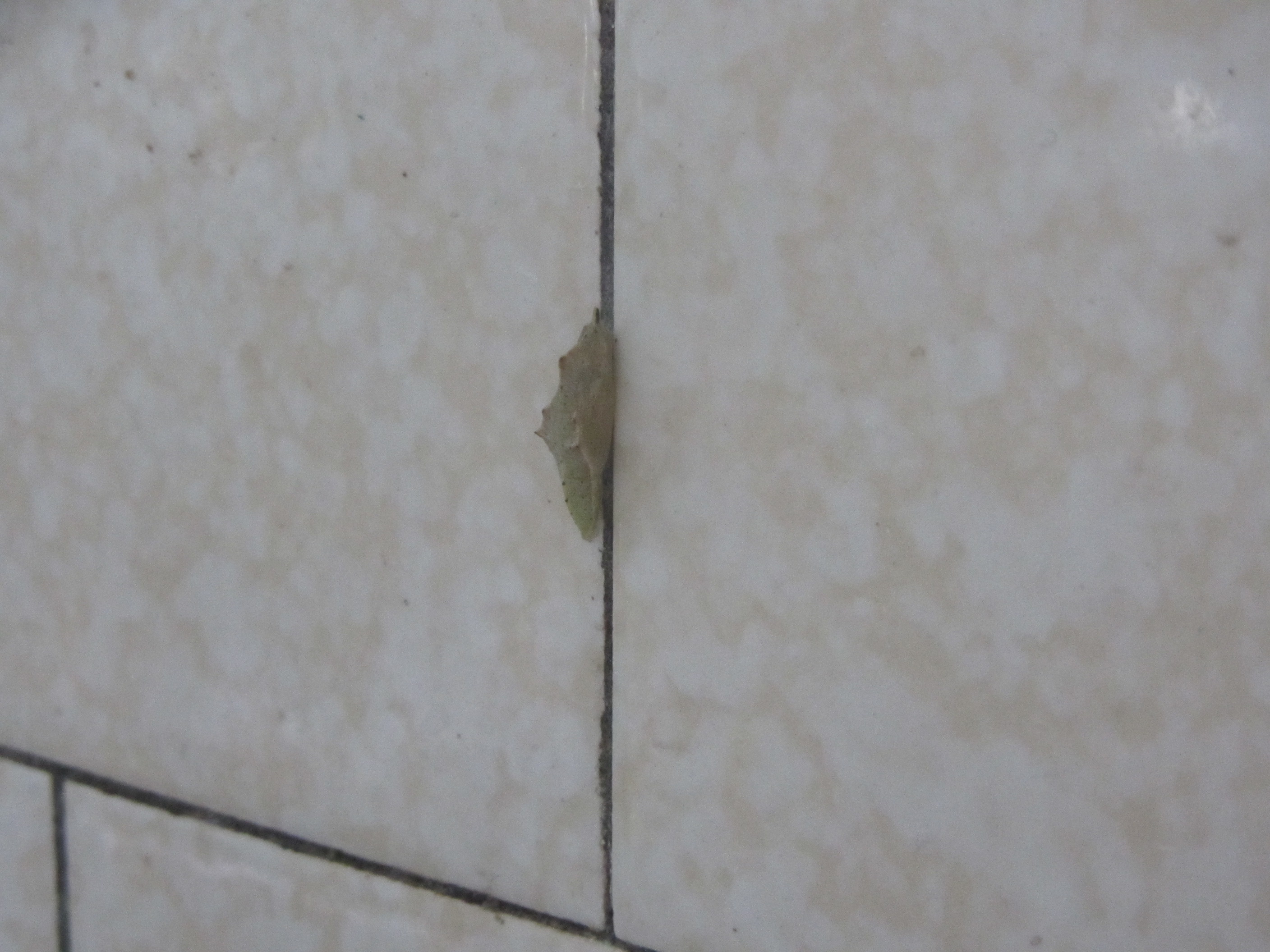
Cabbage butterfly pupa on the tile above my sink. A survivor from washing crucifers from the garden.

Cabbage butterfly pupa on the tile above my sink. A survivor from washing crucifers from the garden.

There are three primary reasons why I haven’t launched aggressive war on the cabbage butterfly (Pieris rapae) caterpillars munching on the cruciferous veggies in my garden, even though I don’t like them:  (1) garden neglect; (2) hostility towards most pesticides; and (3) bonhomie toward caterpillars by my toddler.  There is also a fourth reason.  I know that in general most plants increase production of chemical defense compounds when they detect that they’re being attacked by pathogens or herbivores (Textor and Gershenzon 2009).  Some of these defense compounds have been shown to be beneficial for human health, including those in crucifers.  I’ve been wondering for a while if those caterpillars were actually enhancing the value of the tissue they didn’t consume.  A recent report about a high-defense-compound laden variety of broccoli prompted me to do some research into the issue.  I’m left with more questions than answers. Continue reading →

Bamboo shoots: the facts about bracts, part 3

Bamboo shoots invade the lawn.  The biggest two are ready for harvest (photo by David Inouye)

Bamboo shoots invade the lawn. The biggest two are ready for harvest (photo by David Inouye)

Jeanne continues Bract Month here at the Botanist in the Kitchen by describing the morphology of an interesting and delicious springtime specialty:  fresh bamboo shoots.

I had the distinct pleasure a few weeks ago of trying a temperate springtime speciality:  fresh bamboo shoots.  The friend who shared them with me has a backyard bamboo thicket and harvests the young shoots when they pop up as incursions into the lawn.  Globally, he is in good company, as the fresh shoots show up in springtime (or otherwise seasonally appropriate) markets in most of Asia, which is the native range of most of the 1400+ bamboo species.  Probably like many modern Americans, before steaming the fresh shoots and putting them in a lovely spring chopped salad last week (we used a lemon-garlic-dill vinaigrette), I had only eaten bamboo shoots as neat, thin, rectangular or julienne slices of canned bamboo shoots in various Thai curries at and Chinese soups in restaurants.

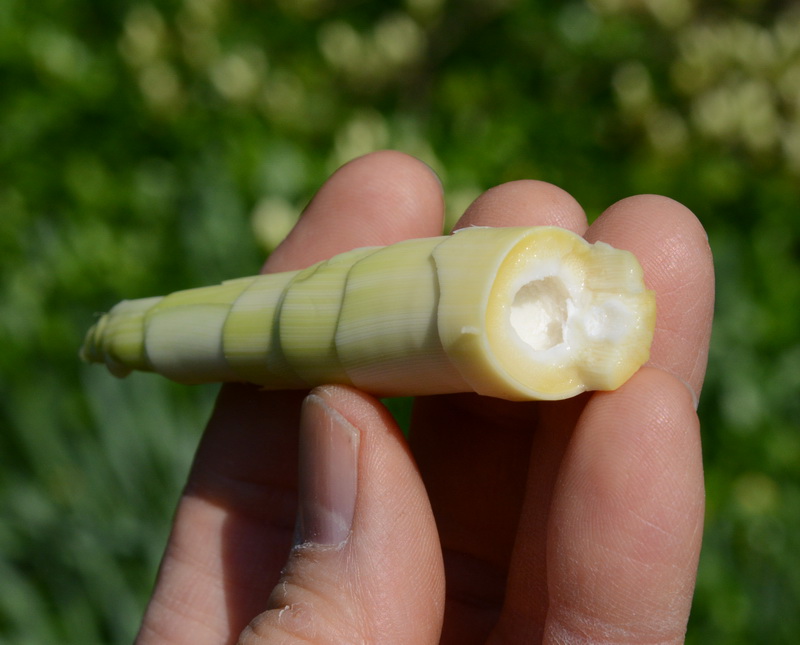
Peeled bamboo shoot, showing tender immature leaves and apical meristem tissue

Peeled bamboo shoot, showing tender immature leaves and apical meristem tissue (photo by David Inouye)

The fresh shoots are a big improvement over the canned and have the texture of asparagus and a flavor like a mild, tangy corn.  These similarities might arise from shared evolutionary history between bamboo and both vegetables.  Like corn, bamboo is a grass (family Poaceae; see our post on the evolution of gluten within the grasses for a phylogenetic context of bamboo within the grasses).  Like asparagus, bamboo is a perennial monocot (see our monocot diversity essay and our food plant tree of life for a refresher on monocots and their phylogenetic position within all plants), and its shoot is a new young stem developing from underground stems called rhizomes that spread out from a parent plant as a form of asexual reproduction. Continue reading →

Greens: why we eat the leaves that we do

Jeanne reveals which branches of the evolutionary tree of plants bear edible leaves and speculates about why that is.

Giant coconut palm (Cocos nucifera) fronds dwarf me

Giant coconut palm (Cocos nucifera) fronds dwarf me

Most of the 300,000 + plant species have leaves, and the function of all of them is to perform photosynthesis.  They are the ultimate source for all of the oxygen and food for the rest of the food chain and help regulate the global carbon and water cycles.  They are also nutrition superstars.  To figure out why greens are good for you and whether all leaves are equal in this regard, we need to take quick look at global leaf structural variability and broad evolutionary patterns in the species that make their way onto our tables. Continue reading →