Tag Archives: garden

Gather and Sow: November 2026

The November 2026 issue of our Gather and Sow newsletter is out, just in time for Plantsgiving.

***Note for educators: There is a G-rated version of this newsletter from which we have omitted mention of alcoholic beverages and salacious details about ancient Egyptians’ beliefs about lettuce.***
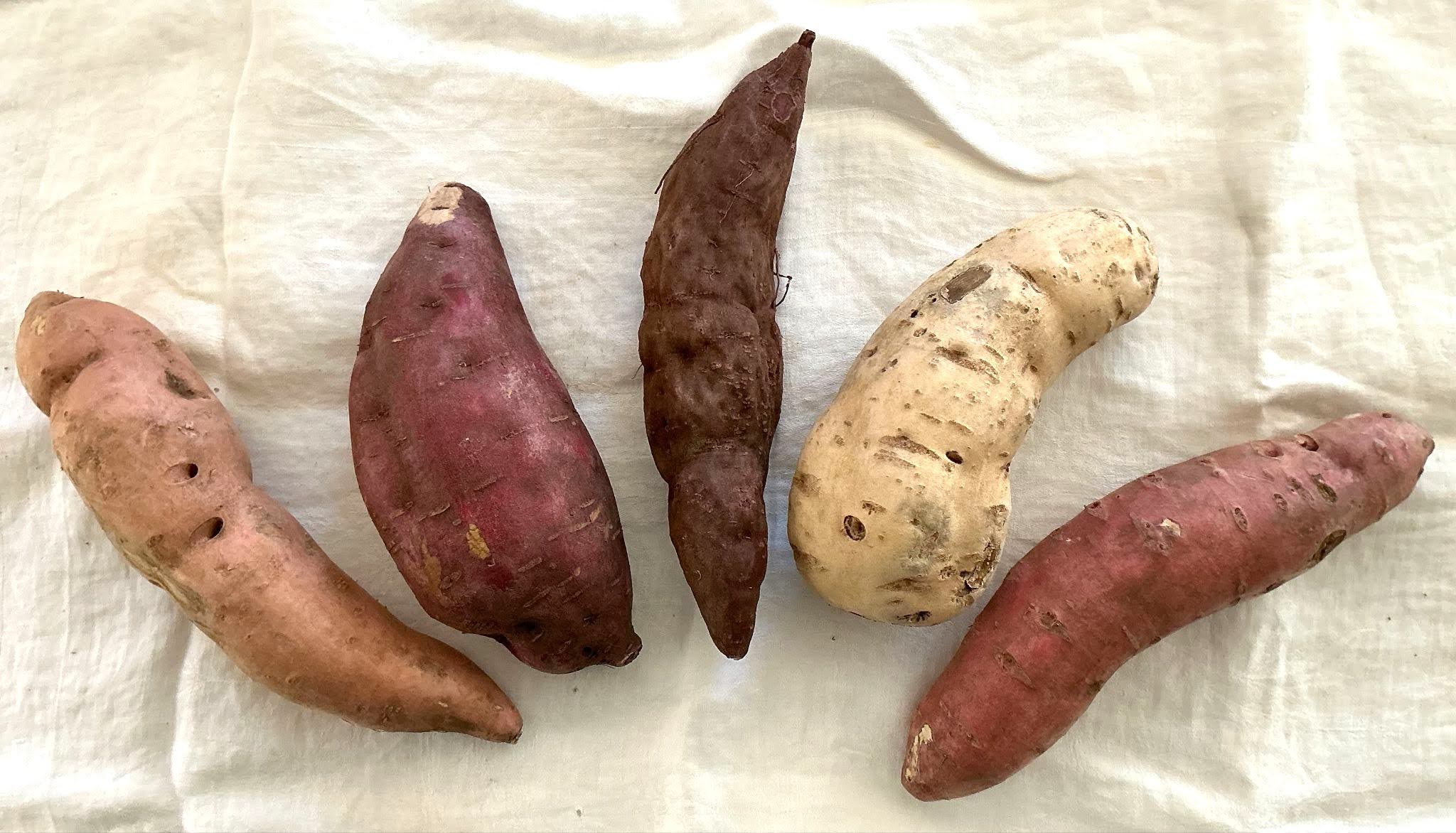
The fourth Thursday in November is, of course, Plantsgiving, a day anticipated for weeks by botanists all across America. That’s when we transform a national day of gluttony into a challenge: put as many botanical ingredients on the table as possible. The winner is the host with the most taxonomically diverse menu (which almost always kicks off with a gin and tonic, netting a couple dozen plants right there).

We love a big branchy phylogenetic tree, but shouldn’t an appealing array of colors and structures count towards diversity, too? We would like to propose that this year’s Plantsgiving contest use a composite metric that accounts for pigments and plant parts. By that measure, you wouldn’t have to mail order obscure spices to compete. Vegetables as common as potatoes and sweet potatoes–stalwarts of the modern holiday menu–could earn you a lot of points if you took advantage of their anthocyanins and carotenoids. And given their importance to diets around the world, we believe that these humble tubers are especially deserving of our gratitude this time of year.

In this month’s Food for Thought we clarify the taxonomic identities of potatoes, sweet potatoes, and yams, and we say a few things about their marvelous colors. We also talk about the tubers that were actually present at the first Thanksgiving. Spoiler: not yams, sweet potatoes, or potatoes. Then, in Botany Lab of the Month, we take a close look at the morphology of potatoes and sweet potatoes. We conclude, as always, with a roundup of recent relevant media and journal articles in Gleanings and Baker’s Dozen. This newsletter will leave you empowered to amass tuber-related Plantsgiving points and transform dinner into a pedagogical opportunity if talk of politics threatens to ruin the meal.

Gather and Sow: October 2026

The Gather and Sow: October 2026 newsletter is out.

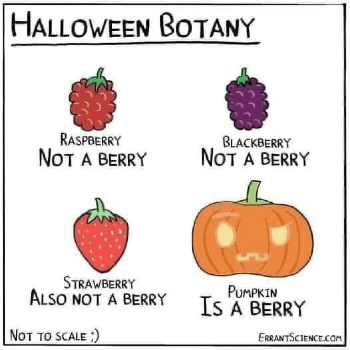
Pumpkins and other winter squashes are gloriously large fruits and are therefore excellent subjects for easy botanical observation. Carving a Jack-O-Lantern or cutting up a squash for a recipe becomes an instructive dissection when you know what to look for. We walk through the necessary information in this month’s Botany Lab of the Month. Before that we provide a brief overview of squash diversity in Food for Thought. We conclude with recent relevant media and journal articles in Gleanings and Baker’s Dozen. But, first, this cartoon from Errant Science that ties some of our summer newsletter topics to this one: 

Strictly botanically speaking, a “berry” is just a fleshy fruit that arises from a flower with a single ovary. The cartoon hilariously illustrates that the colloquial use of “berry” sometimes clashes discordantly with the botanical definition. In casual speech, a berry is a smallish, juicy thing, regardless of how many ovaries the flower in question might have (raspberry and blackberry flowers have numerous ovaries, as we discussed in July’s newsletter), or whether a flower’s ovary was involved at all (the delicious part of a strawberry arises from the flower’s receptacle, not ovary, as we showed in June’s newsletter). Several fruits comfortably fit both definitions, such as blueberries (Vaccinium) and grapes (Vitis). Some botanical berries, though, like tomatoes and eggplants (Solanum), aren’t thought of as smallish and sweet. Squashes, cucumbers, and melons (and loofah!)–the cucurbits (family Cucurbitaceae)–are all pepos, a special type of berry. They develop from flowers with a single inferior ovary, surrounded by a protective hypanthium. The hypanthium fuses to the ovary wall to make the hard rind that surrounds the mature fruit (more on this below in Botany Lab of the Month). We showed in last month’s newsletter that apple flowers also have inferior ovaries. The apple hypanthium develops into delicious tissue instead of a hard rind, making apples pomes, not pepos.